
Quick Answer: Single-Curved Facade Radius and Segmentation
A single-curved aluminum facade panel bends around one constant or controlled radius in one direction. Before fabrication, confirm the finished-face radius, arc length or chord, panel width, segmentation lines, joints, folded returns, reinforcement and fixing datum. Double-curved or spherical surfaces need a different forming and model-review workflow, so they should not be quoted as ordinary roll-curved panels.
Use the single-curved and double-curved aluminum panel guide to compare geometry routes, and the Saudi spherical facade case for a double-curved reference. When hole pattern and open area are the primary variables, follow the canonical perforated facade guide. Review Punchuk factory capability atau send radius and segmentation drawings for review.
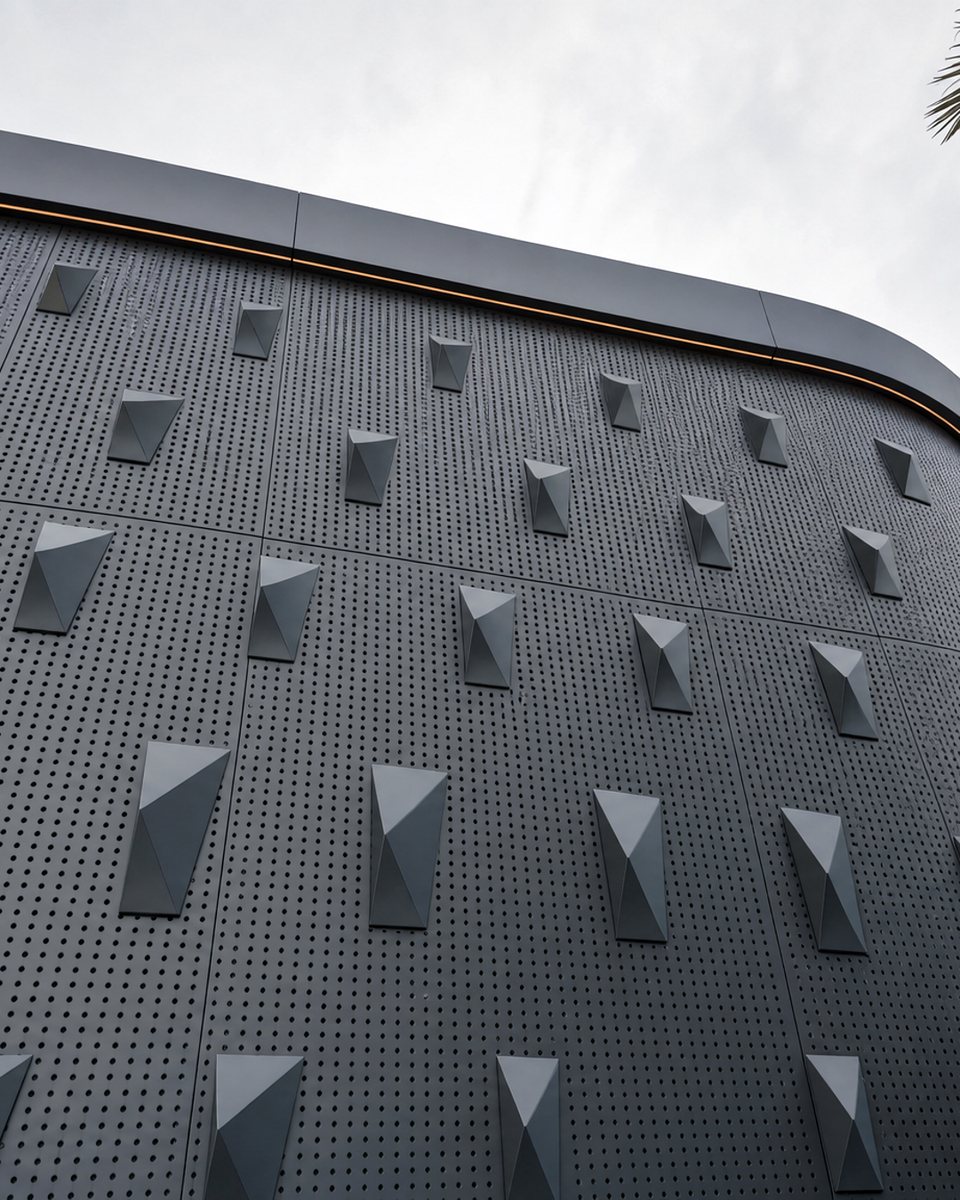
Curved and perforated aluminum facade panels help architects create lightweight building skins with ventilation, shading and strong visual identity. They are commonly used for commercial facades, curtain wall screens, canopies, feature walls, curved corners, column covers, roof edges and renovation projects that need more design depth than flat cladding.
These panels are more complex than standard flat aluminum cladding. The curved radius, perforation pattern, open area, panel thickness, folded edge, alloy, reinforcement, coating and installation method all need to work together. A small mistake in radius or pattern layout can affect panel fit, facade alignment and site installation speed.
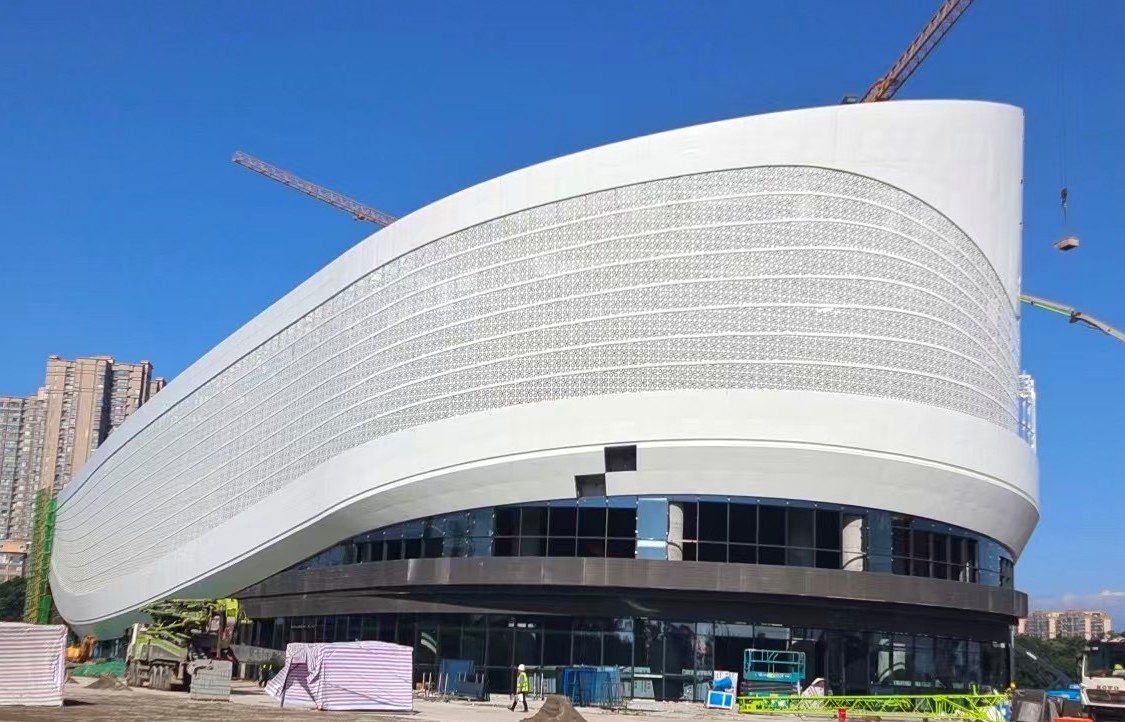
Where Curved Aluminum Facade Panels Are Used
- Rounded exterior corners, balcony bands and curved curtain wall zones.
- Entrance canopies, roof edges, soffits and flowing transition details.
- Circular or elliptical column covers and curved feature walls.
- Retail, hotel, cultural, transport and commercial renovation facades.
- Project-specific modules where radius, joint lines and installation sequence must be coordinated before fabrication.
Curved Aluminum Facade Panels
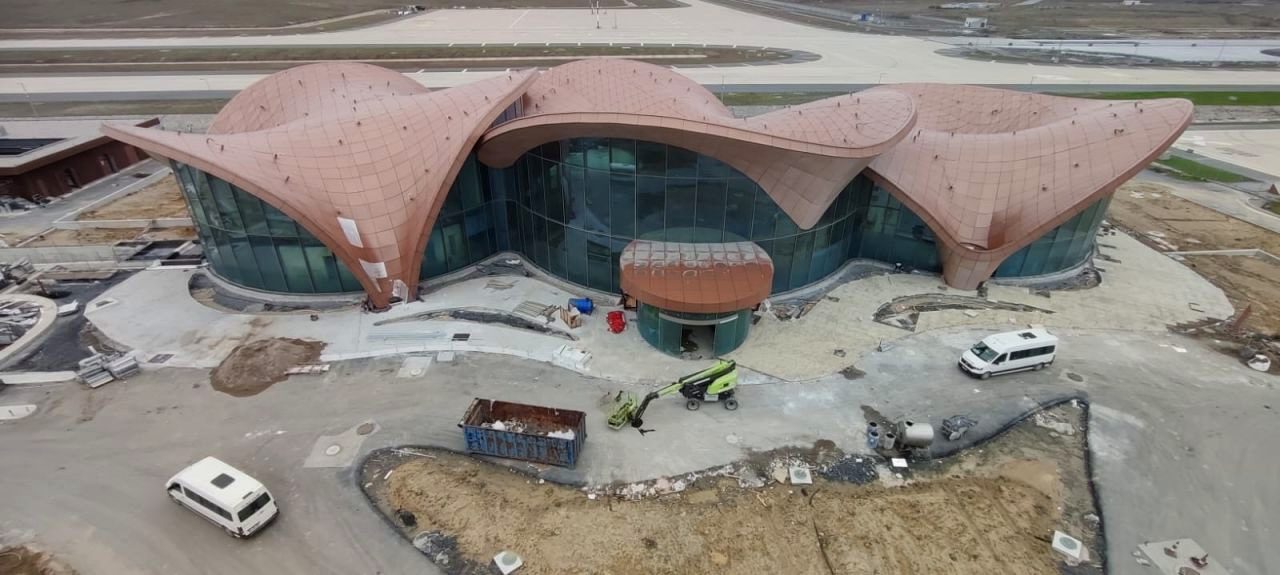
Curved aluminum panels are used when the facade design needs a rounded corner, flowing roof edge, curved canopy, circular column cover or special architectural shape. The panel can be rolled, bent, welded, ground and finished according to approved shop drawings. For solid aluminum panels, common project requirements include custom radius, folded return edges, reinforced ribs, installation holes and PVDF or powder coating.
The most important curved panel details are radius, chord length, arc length, panel segmentation, joint width, edge return, support frame and tolerance. If the radius is tight or the panel is large, sample production or a mock-up is useful before mass production.
Perforation as a Secondary Option for Curved Panels
Perforation can be added after the curved-panel geometry, radius, bend lines and support conditions are defined. Hole size, spacing, open area, edge distance and pattern direction must be checked against forming limits and stiffness. For the primary perforation specification, use the perforated aluminum facade pattern and open-area guide.
When perforation is included, mark it as an optional panel requirement in the drawings rather than using it to define the main curved-facade geometry.
When Curved Geometry and Perforation Are Combined
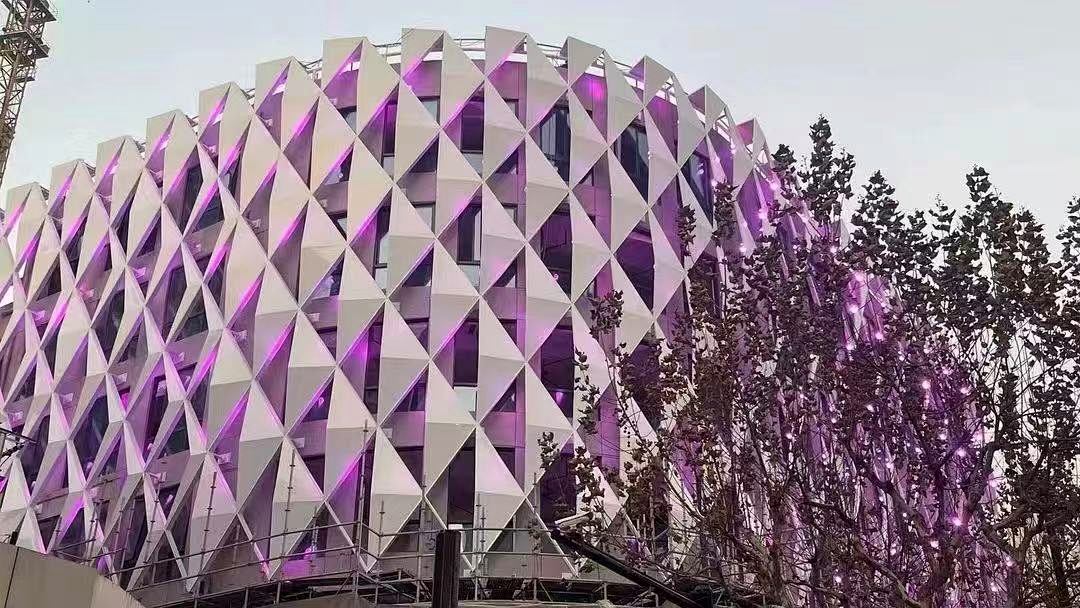
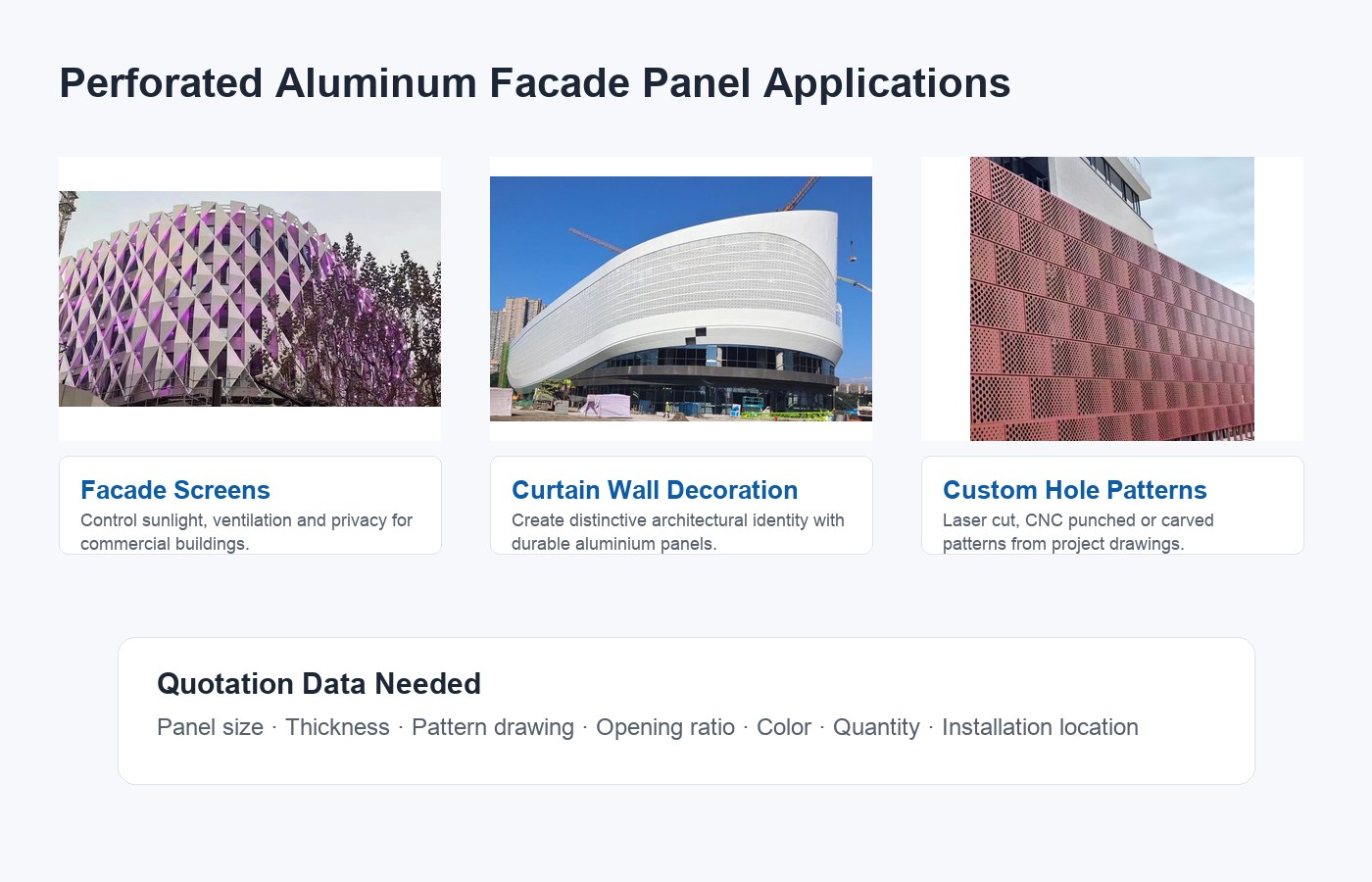
Some projects need both curved forming and perforation in the same facade system. This can create a strong architectural effect, but it also increases design and production complexity. The perforation pattern may stretch visually on curved surfaces, and holes too close to a bend line can cause distortion or weakness during forming.
For combined curved and perforated panels, confirm the radius, pattern direction, hole spacing, open area, edge distance, bend line, joint position and installation sequence before fabrication. It is better to approve a small sample or a full-size mock-up when the facade is highly visible.
Daftar Periksa Spesifikasi
| Detail | Hal-hal yang Perlu Dipastikan |
|---|---|
| Design radius | Inside or outside radius, centerline, arc length, chord length and control points. |
| Segmentation | Panel divisions, joint widths, joint alignment, numbering and installation direction. |
| Edges and supports | Folded returns, stiffeners, subframe interfaces, fixing points and access clearances. |
| Bahan | Aluminum alloy, thickness, module size, forming depth and reinforcement requirement. |
| Tolerances | Radius accuracy, diagonals, joint consistency, sample approval and site adjustment allowance. |
| Selesai | PVDF coating, powder coating, color code, gloss level and coating sequence after forming. |
| Optional perforation | Hole artwork, spacing, open area, edge distance and pattern direction only when required. |
| Penawaran | 2D drawings, 3D geometry where available, quantity, destination, packing and delivery schedule. |
Thickness, Alloy and Reinforcement
Curved aluminum panels require thickness and alloy review together with module size, radius, folded returns, stiffeners, support spacing, wind inputs and the approved forming method. Common comparison points include 2.0mm, 2.5mm and 3.0mm, while final selection remains project-specific. Alloys such as 1100, 3003 or 5052 may be considered according to forming and strength requirements.
Curved panels may need rolling control, welded transitions or back reinforcement. Large modules, tight radii and exposed elevations should be reviewed with shop drawings and, where useful, a sample or full-size mock-up before production. Optional perforation requires a separate edge-distance and stiffness check.
Related guide: Panduan Ketebalan Panel Pelapis Aluminium.
Finish and Quality Control
Exterior curved and perforated aluminum panels commonly use PVDF coating or fluorocarbon coating for weather resistance and color stability. Powder coating can be suitable for interior or sheltered architectural panels. For curved panels, coating coverage and color consistency should be checked after forming. For perforated panels, cut-edge treatment and coating coverage around holes should be controlled carefully.
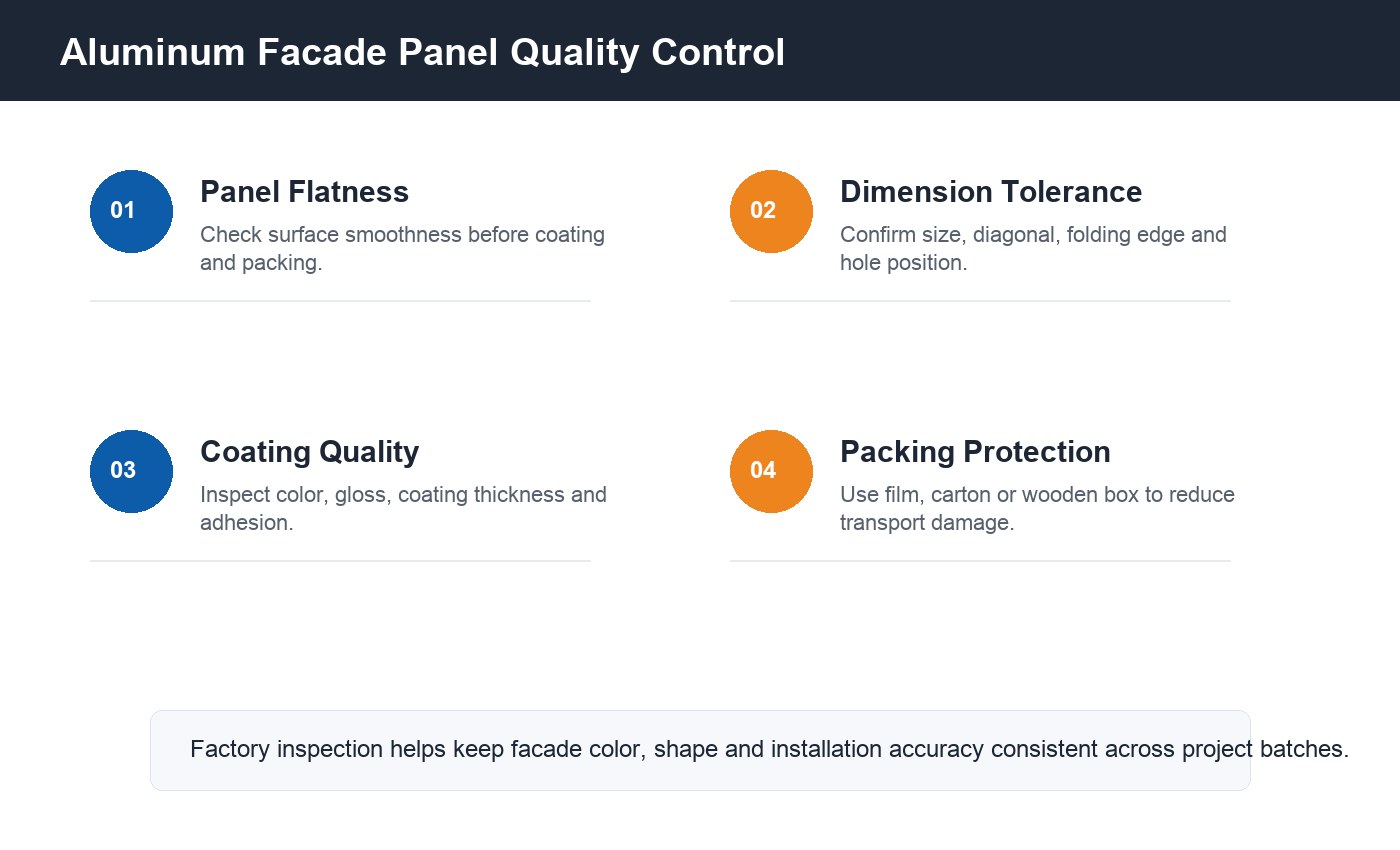
Quality control should include radius accuracy, pattern accuracy, panel size, diagonal tolerance, folded edge quality, surface flatness, coating color, gloss, packing protection and panel numbering. Clear labels are especially important for curved and custom-shaped panels because many pieces may look similar but fit different positions.
RFQ Checklist for Custom Facade Panels
- Facade elevation, shop drawings, CAD files or panel schedule.
- Panel type, size, radius, thickness, alloy and folded edge details.
- Perforation pattern, open area, artwork file and pattern direction.
- Finish type, color code, gloss level and coating requirement.
- Fixing method, support frame, installation sequence and wind load requirement.
- Quantity, project location, delivery schedule and export packing requirement.
- Sample or mock-up requirement before mass production.
Tautan Produk dan Panduan Terkait
Compare fabrication methods in the single-curved and double-curved aluminum panel guide, then review the Saudi spherical aluminum panel case for complex 3D segmentation evidence. The perforated aluminum facade guide owns pattern and open-area specification. Related project routes include panel aluminium padat, factory capability Dan sending drawings for technical review.
Single-Curved Facade Radius and Segmentation FAQ
How should a single-curved aluminum facade panel radius be specified?
State whether the radius is measured to the finished face, centerline or back of panel. Also provide the chord, arc length, panel width, orientation and tolerances so the rolling and checking datum is unambiguous.
How should a curved facade be divided into manufacturable panel segments?
Coordinate segmentation from the elevation and sections, then confirm joint positions, maximum panel size, transport limits, folded returns, reinforcement and fixing points. Keep control lines and panel numbers consistent between the 3D model and shop drawings.
When does a facade need double-curved rather than single-curved panels?
A single-curved panel bends mainly in one direction and can usually be developed from a flat sheet. Surfaces that change curvature in two directions, such as spheres and domes, need double-curved forming, 3D model review and a different quotation workflow.
What files should buyers send for a single-curved facade quotation?
Send elevations, sections, radius or control-line data, panel layout, typical joints, fixing details, thickness, finish, quantity, destination and schedule. Include a 3D model when transitions or interfaces cannot be defined clearly in 2D drawings.
Related Hotel Facade Project
For a real project reference, see the Malaysia Hotel Solid Aluminum Panel Project by Punchuk. The case shows custom solid aluminum panels, perforated aluminum facade screens, geometric aluminum cladding, export packing, container loading, site installation progress and interior aluminum ceiling panels for a hotel project.
This project is useful for buyers comparing solid aluminum panel manufacturers, PVDF aluminum facade panels, perforated curtain wall screens and custom aluminum cladding suppliers for hotel or commercial building projects.
 Indonesian
  English
  Vietnamese
  Malay
Malay  Arabic
  Thai
Thai  Chinese
  Russian
  Kazakh
  Spanish