
Choosing an aluminum cladding panel factory is not only about comparing unit price. A reliable supplier should understand architectural drawings, panel fabrication, surface finishing, inspection and packing before the materials are shipped to the project site.
This guide explains the typical factory workflow for custom aluminum facade panels, including solid aluminum panels, perforated aluminum panels, curved panels and decorative exterior cladding.
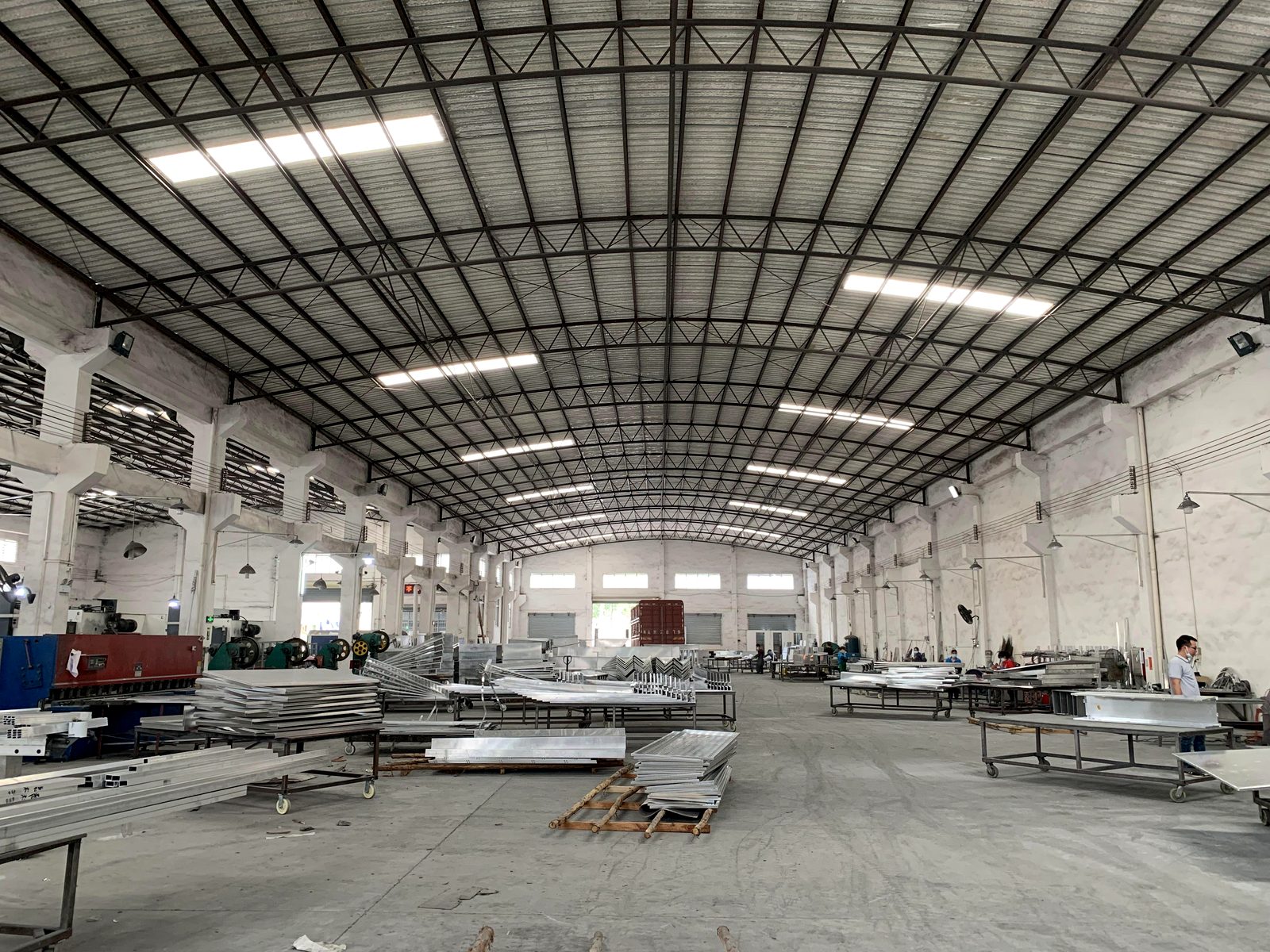
1. Drawing Review and Material Confirmation
Before production starts, the factory should review the architectural drawings, shop drawings, panel layout, fixing method, panel size, thickness, alloy requirement and surface finish. For aluminum single panels, common project requirements often include aluminum alloy such as 1100 or 3003, thickness options from 1.5mm to 5.0mm, and finishes such as PVDF coating, powder coating or anodizing.
The exact specification should always follow the project drawings and approved sample. This is especially important for curved aluminum panels, perforated aluminum facade screens and special-shaped panels, because the forming method and tolerance affect installation on site.
2. Cutting, Punching, Bending and Forming
From the drawing to the cut panel
This is PUNCHUK’s CNC cutting workshop. For a custom solid aluminium panel enquiry, include a typical panel drawing showing the outline, openings and folded returns. Identify the drawing revision and any details still awaiting approval so the quotation can distinguish confirmed requirements from open decisions.
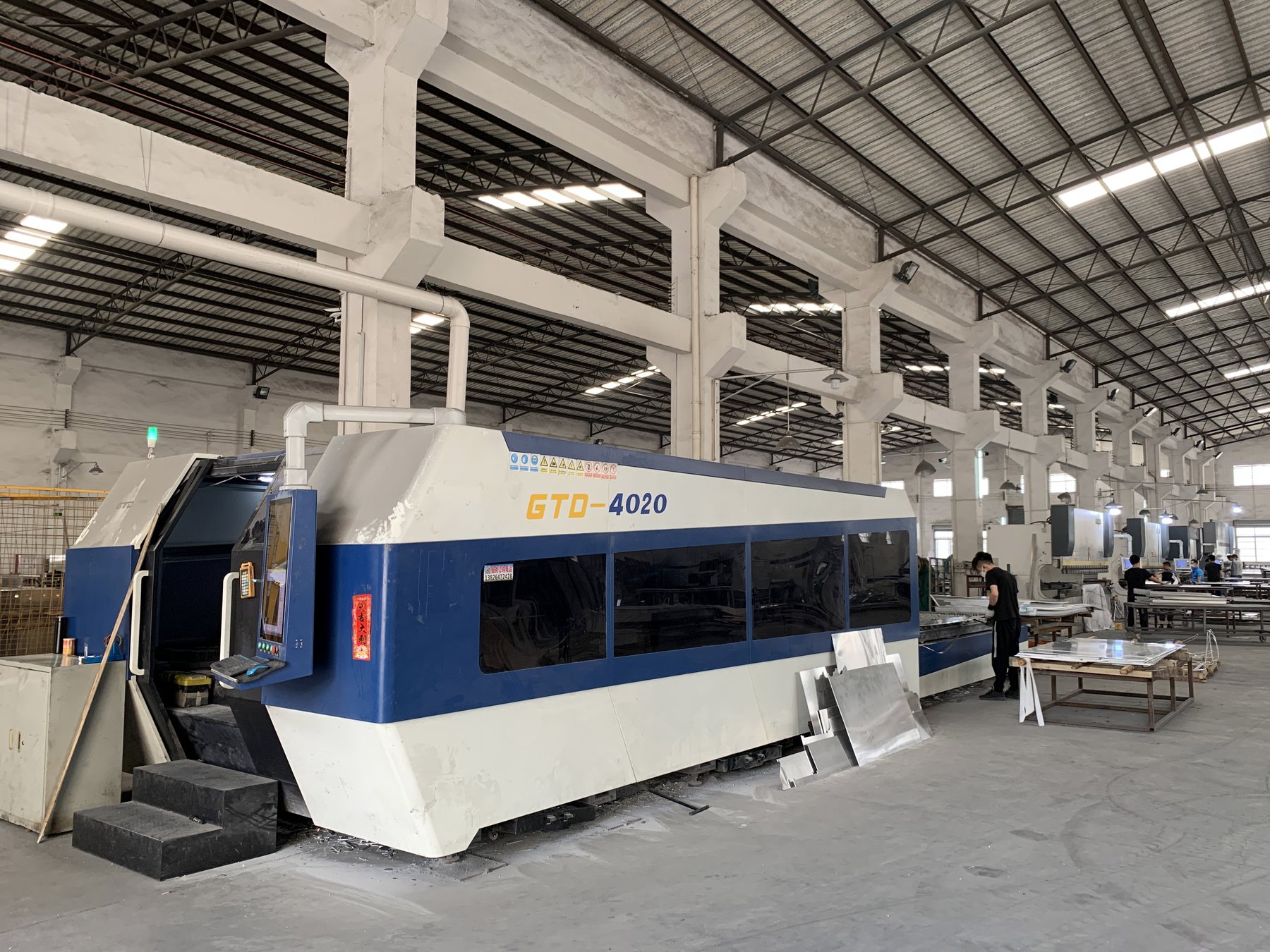
After the drawings are confirmed, aluminum sheets are cut and processed according to panel dimensions. Depending on the product type, the factory may use CNC cutting, punching, bending, welding, grinding and forming. Perforated aluminum panels require additional control over hole size, open area, edge distance and pattern alignment.
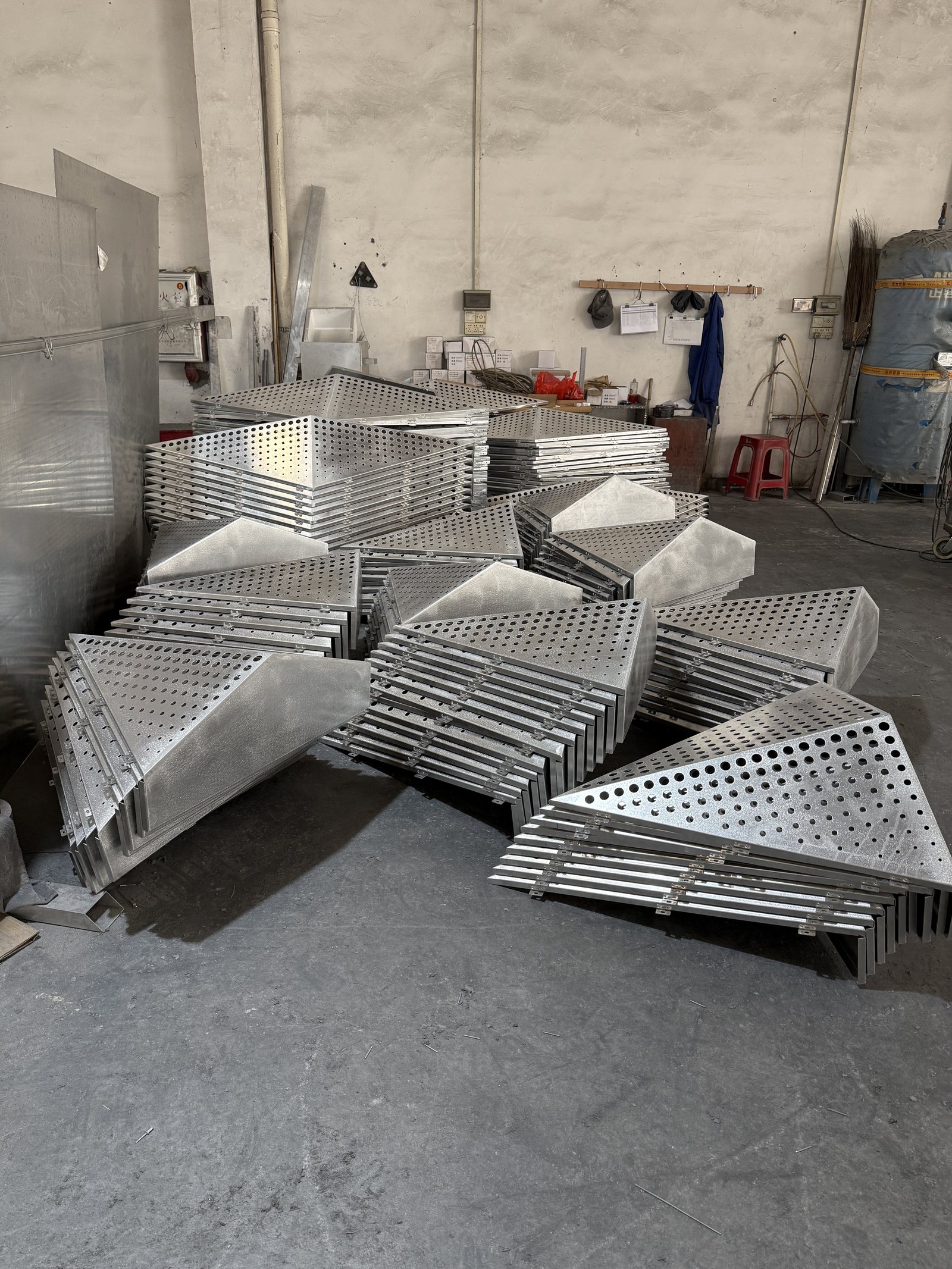
Perforated panels before finishing
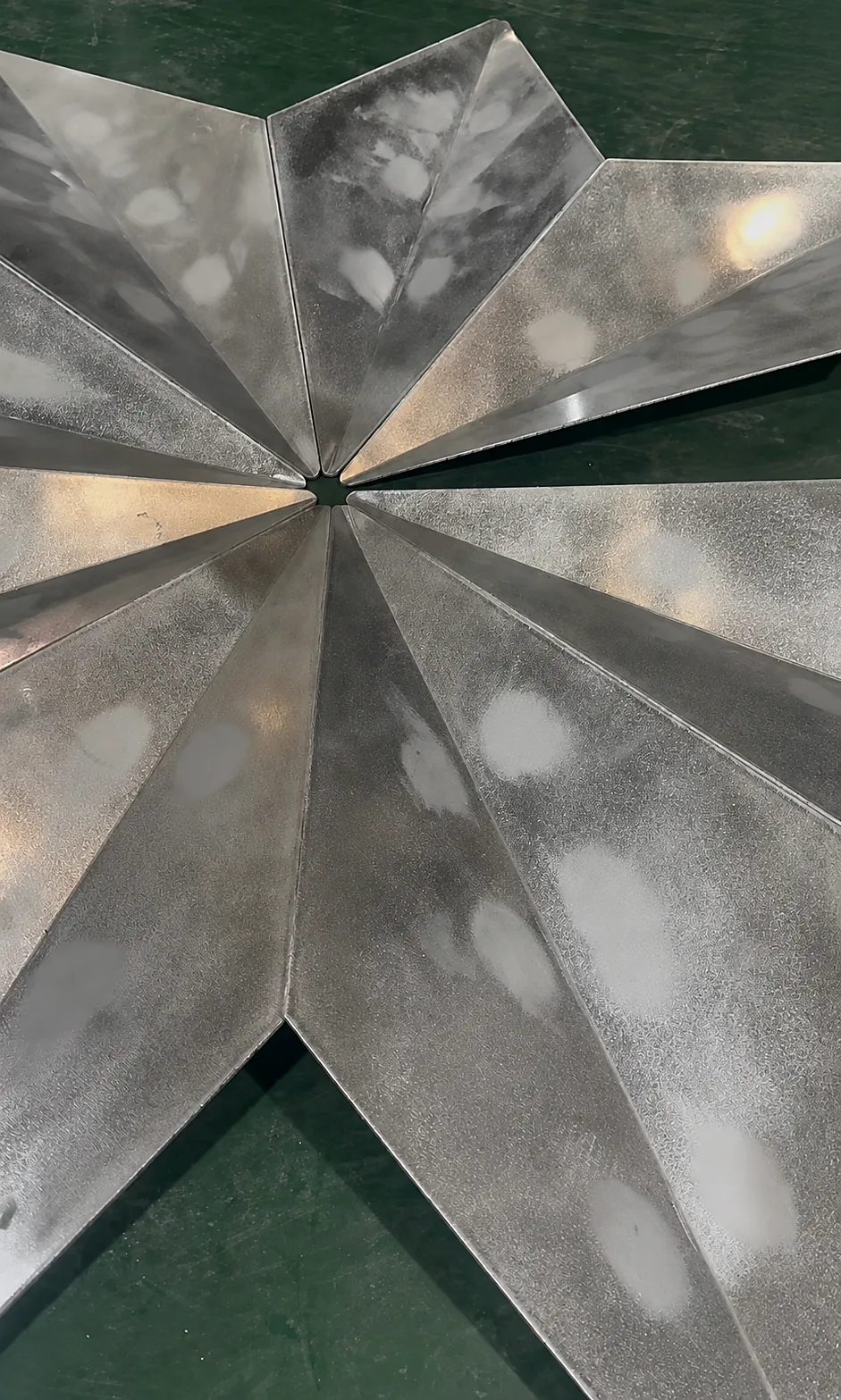
These perforated solid aluminium panels were photographed during production for PUNCHUK’s Malaysia hotel order. The image shows shaped edges and different panel outlines before the finished facade stage. For a similar package, identify the perforation pattern, edge margins and orientation on the panel drawing. Use the agreed drawing and inspection records—not the photograph alone—to check dimensions and acceptance.
3. Surface Treatment and Coating
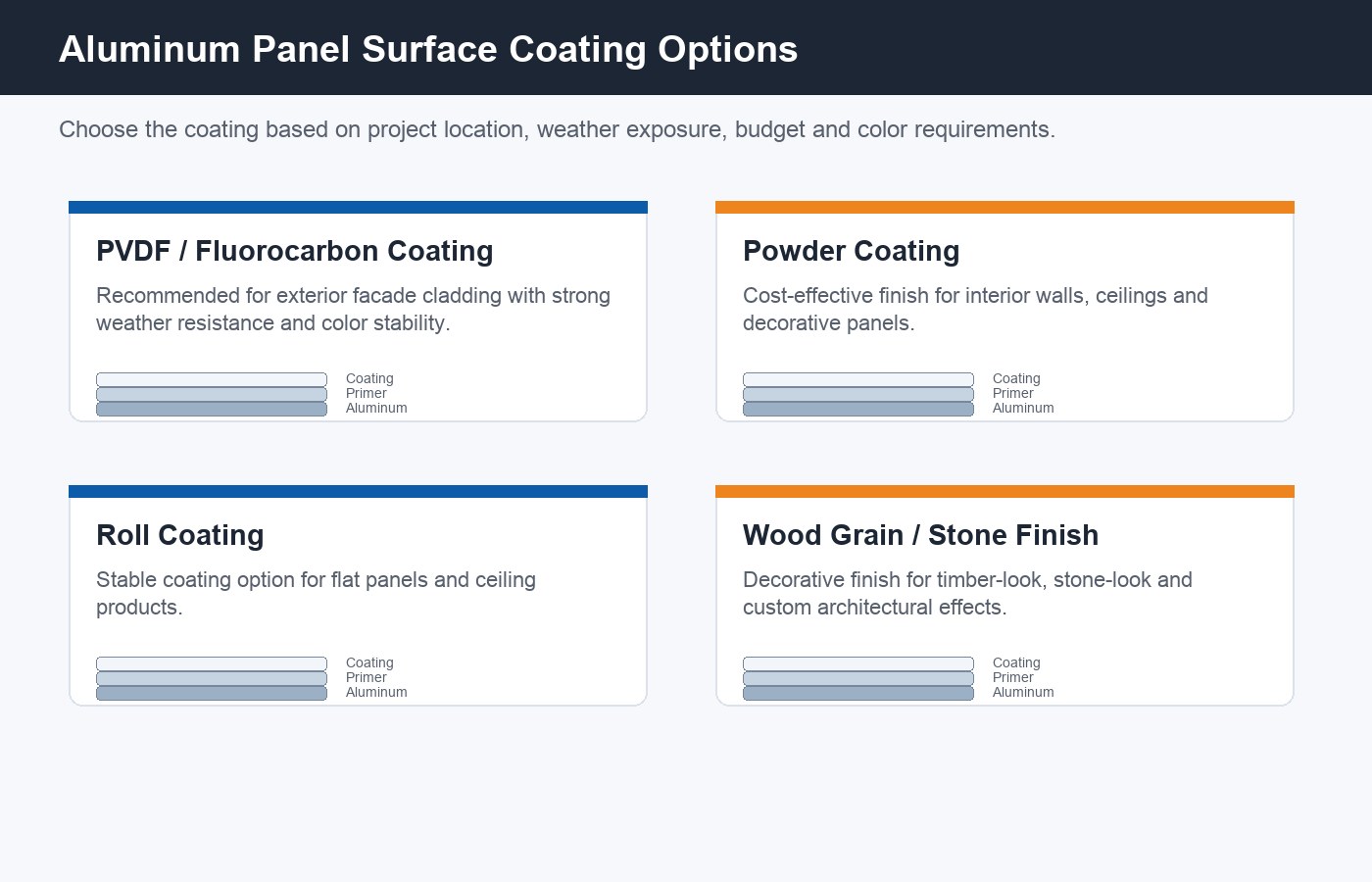
Exterior aluminum cladding panels normally require a durable surface finish. PVDF coating is widely used for outdoor curtain wall and facade projects because it supports weather resistance and color stability. Powder coating and anodizing can also be selected depending on the design, budget and project environment.
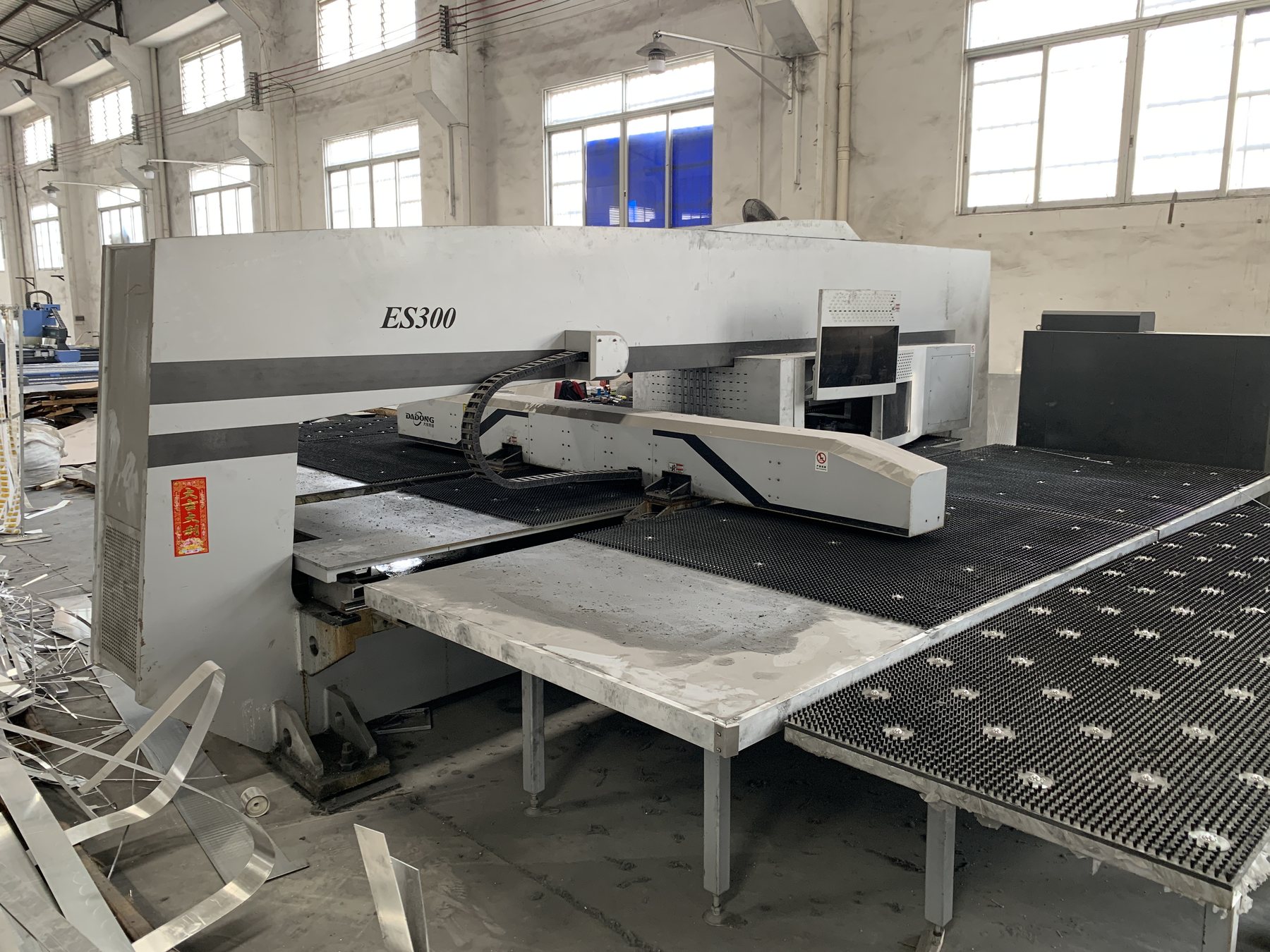
The wider workshop view helps buyers understand production capacity, material handling and the working environment behind custom facade cladding orders.
4. Quality Control Before Packing
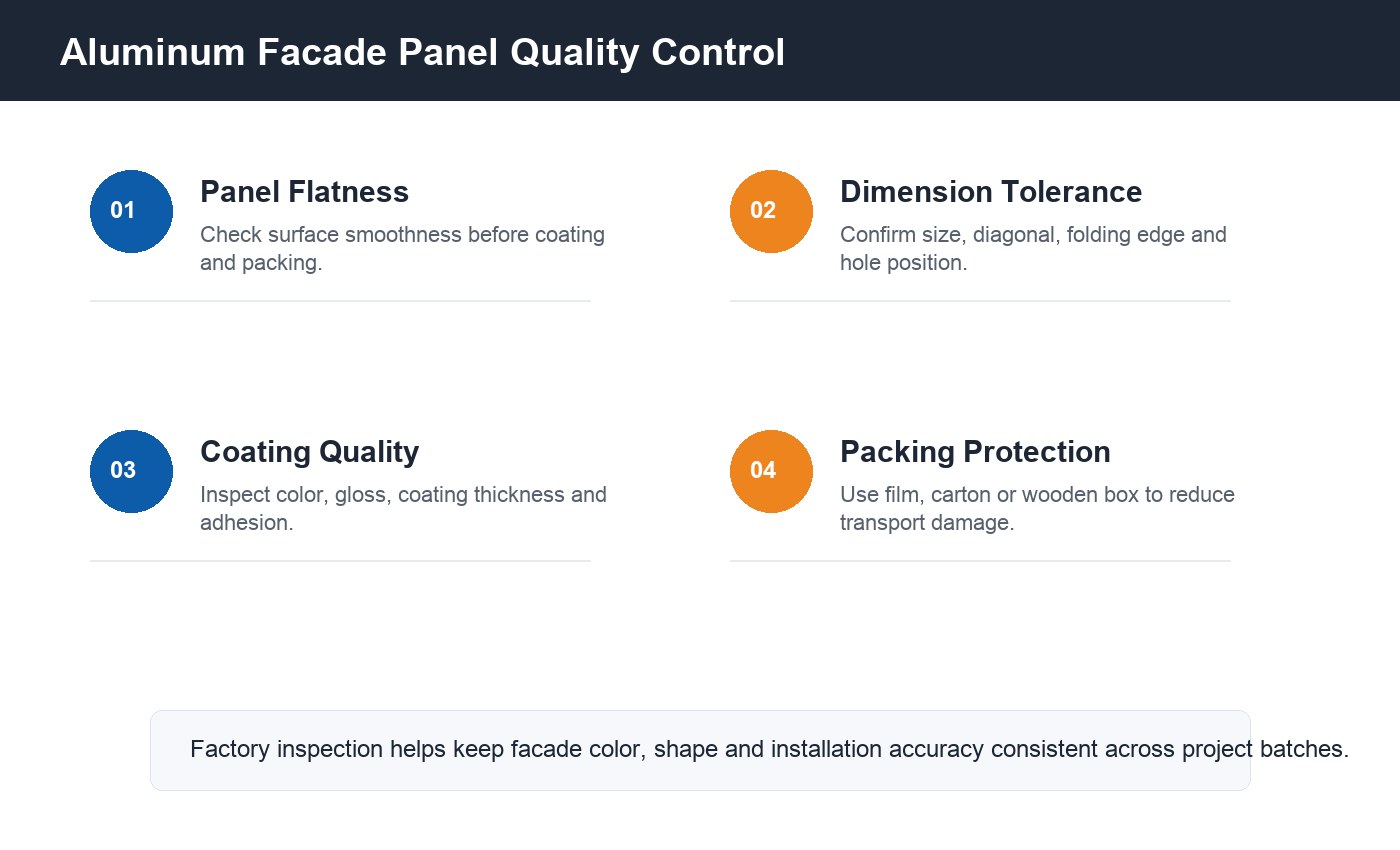
Quality control should check dimensions, bending accuracy, diagonal tolerance, welding and grinding quality, surface color, coating appearance, protective film and packing condition. For export orders, clear packing and labeling help contractors identify each panel according to the installation sequence.
Samples and production checks
Can I check a sample before ordering, and how is it linked to the bulk panels?
PUNCHUK has supplied project samples. The type, cost and timing depend on the item requested. A colour sample, a formed panel and an assembled mock-up answer different questions. Receiving a sample is not the same as approving it for production.
| Sample type | Useful for reviewing | Does not establish on its own |
|---|---|---|
| Finish or colour sample | The agreed colour, gloss and texture under agreed viewing conditions. | Full-panel geometry, fixing performance or every property of the finished coating. |
| Formed panel sample | Folds, edge returns, perforations, weld appearance where relevant, and dimensions against its drawing. | The fit of a complete facade or the acceptance of later production batches. |
| Mock-up or trial assembly | Selected joints, panel alignment and interfaces across a defined assembly. | Approval of unrelated parts, the whole building or structural performance without the specified verification. |
Connect approval to a traceable reference
For your order, agree a sample and inspection record before production. The following is a buyer checklist, not a statement that every PUNCHUK order includes the same tests or services.
- Identify the sample. Record its ID, panel mark or part type, drawing revision, thickness and finish reference. Separate “received”, “under review”, “approved” and “changes required”.
- Write down the approval. Name the approver, date and any limits or comments. Where a physical reference is needed for bulk comparison, agree who retains it and how it is identified.
- Link the bulk checks. Record the batch or panel marks against the approved drawing and sample reference. Agree the dimensions, formed details, appearance and packing checks, their criteria, who checks them and which records the buyer receives. Required performance tests need their own agreed scope.
- Resolve changes before release. A revised colour, drawing or panel detail may need another review. Record the affected parts and the decision; do not treat silence or a delivery receipt as approval.
- Match the dispatch records. Check the panel identifiers, accessory list, packing photos and packing list against the final order. Record cancelled or changed items rather than leaving them to a chat-history interpretation.
What the existing project evidence shows
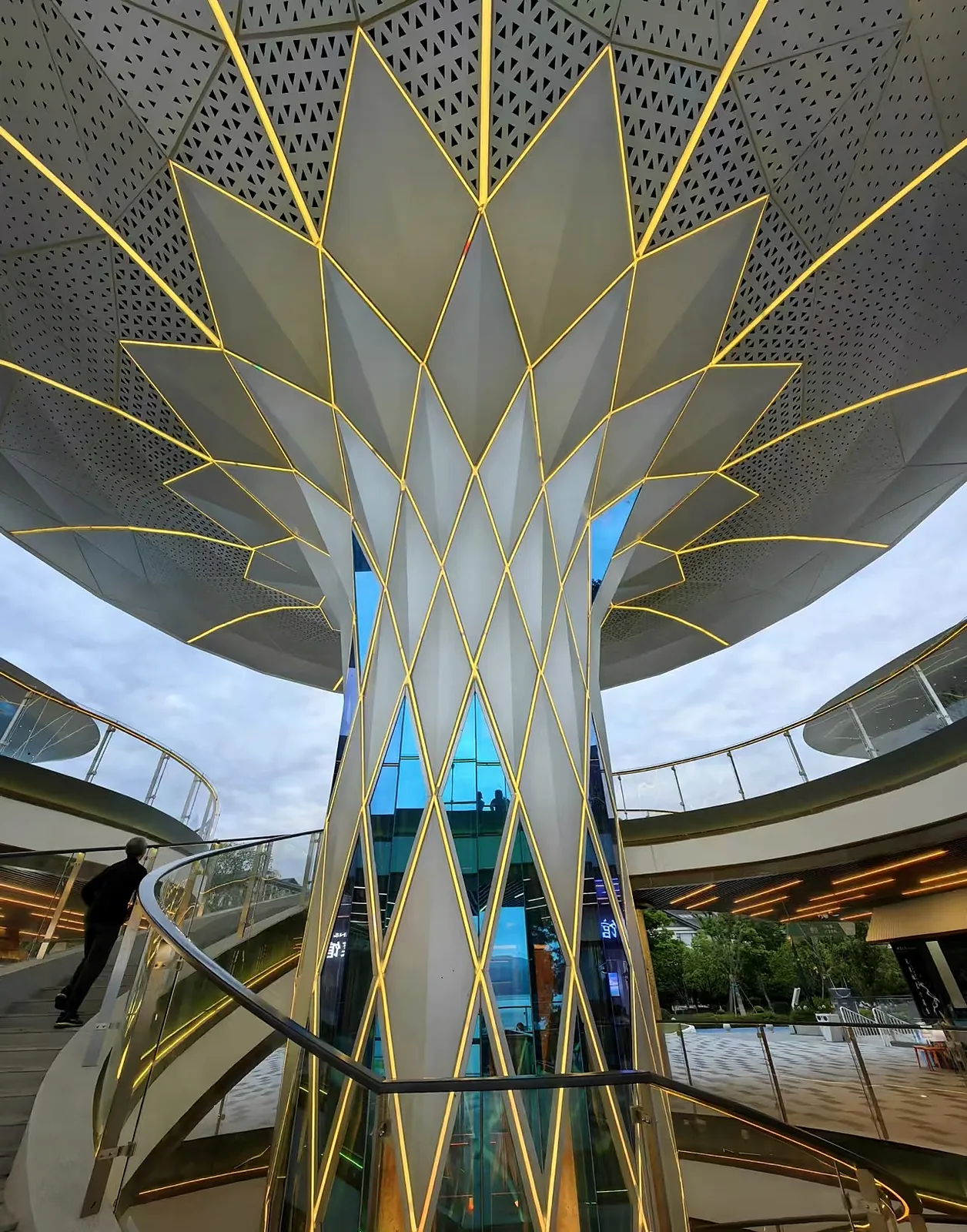
The Guangzhou 2.5 mm folded-panel case records shop drawings and workshop assembly stages. The Hainan case records 3.0 mm panels with a white three-coat PVDF finish. These references explain why shape and finish need separate checks; project photographs do not replace signed approvals or inspection results.
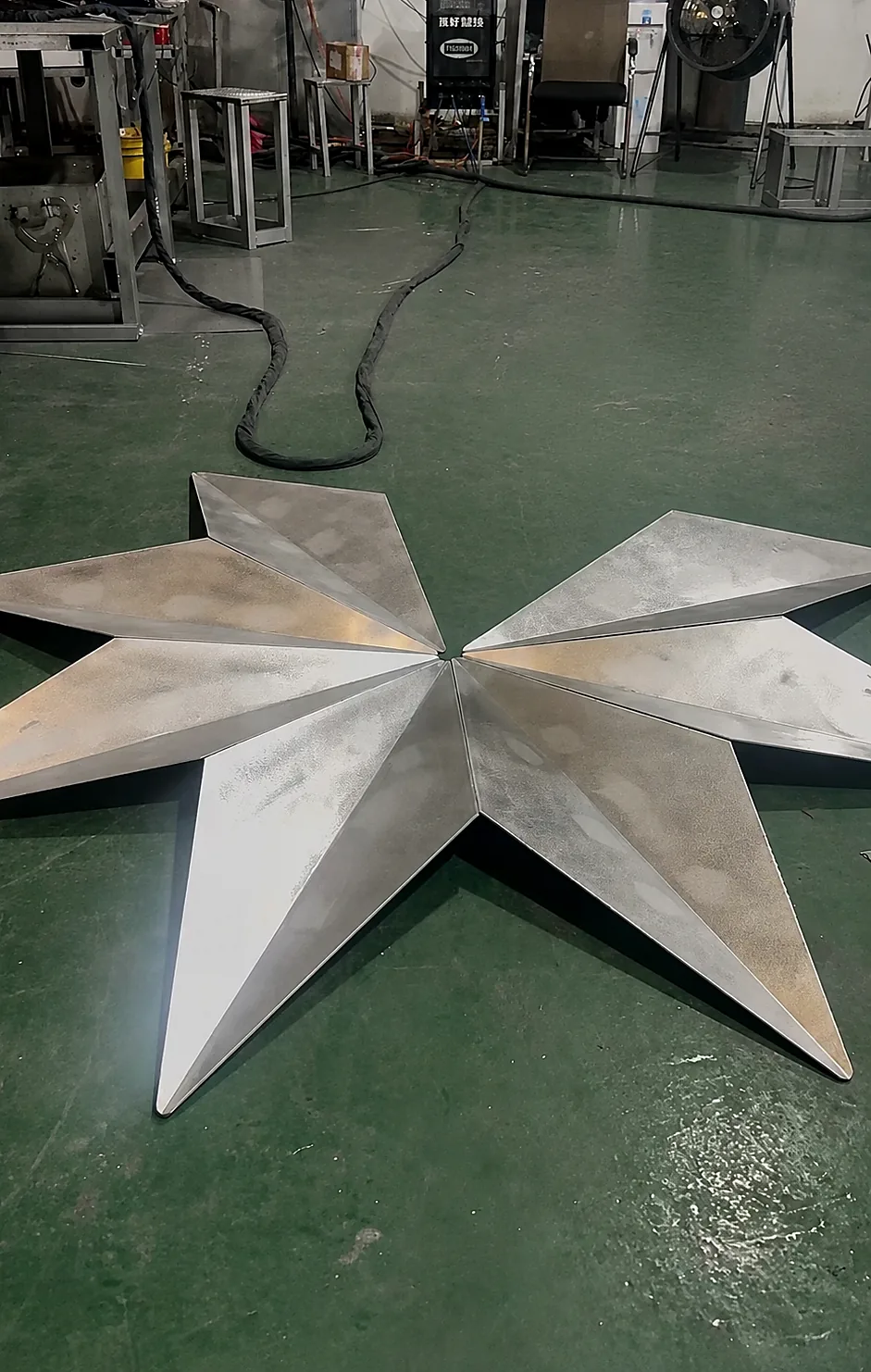
Review the factory capability information alongside the RFQ checklist. Sample dimensions, charges, freight and timing are confirmed for the requested item, not assumed from a general website example.
How are bulk solid aluminium panels checked for container loading?
For PUNCHUK’s bulk solid aluminium panel orders, panels are generally loaded directly into a shipping container rather than assigned individual numbered wooden crates. The packing arrangement should be agreed for the order.
Before dispatch, reconcile the panel quantities by packing-list item or agreed panel reference. List accessories and consumables separately so the shipment total is not mistaken for the number of aluminium panels. A packing-list column labelled “CTNS” does not by itself establish that the panels are packed in wooden crates.
Agree which records the buyer needs for receipt and unloading: the item quantities, loading photographs, and any grouping or unloading sequence required for the site. Container and seal references can be shared privately with the shipment documents where applicable.
Distinguish calculated packing volume and weight from measured shipment figures. Confirm the basis before using them for transport planning. A packing list records declared shipment details; it does not replace inspection results or prove how every panel was physically loaded.
Send your drawings, BOQ or panel schedule, panel quantity, proposed thickness, finish, project stage and delivery country. Tell us about site access and unloading requirements when requesting a packing review.
5. Site Coordination and Installation Support
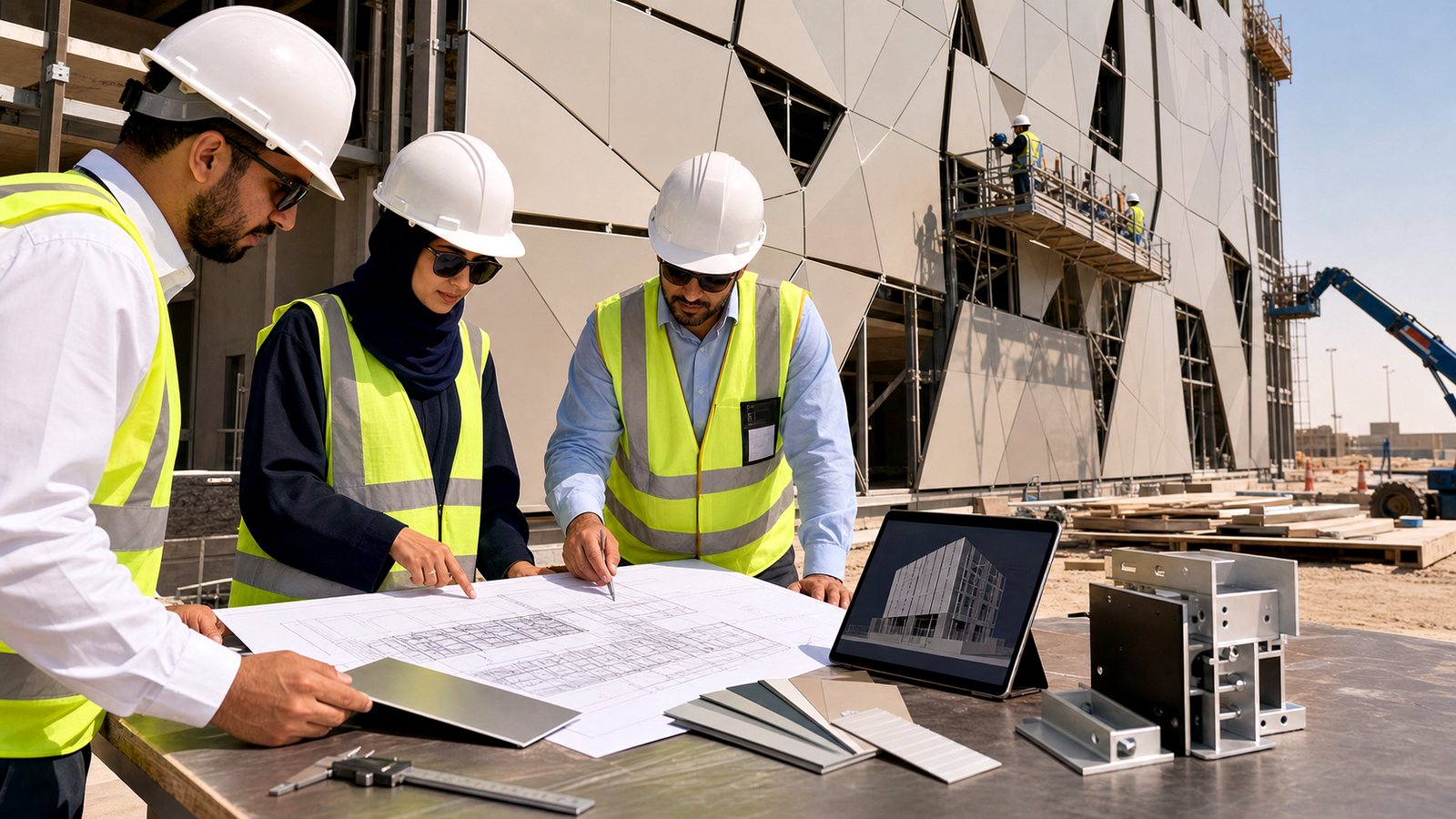
Factory production is only one part of a facade project. Good communication between the buyer, installer and factory helps reduce problems with brackets, subframes, panel joints and replacement panels. When drawings, finish samples and packing lists are controlled well, installation can move faster on site.
Related Factory and Material Guides
For more project photos, visit the aluminum panel factory and project gallery. For coating durability, compare แผ่นอลูมิเนียม PVDF สำหรับตกแต่งภายนอกอาคาร.
Work With Punchuk
Punchuk supplies custom aluminum facade panels for contractors, architects and import buyers. To compare product options, visit the ผลิตภัณฑ์แผงอลูมิเนียมสำหรับตกแต่งภายนอกอาคาร, view the แกลเลอรี่โรงงานและโครงการ, หรือ ติดต่อ Punchuk พร้อมด้วยแบบร่างและข้อกำหนดของโครงการของคุณ.
Related Guides
For product selection after factory review, read แผ่นอลูมิเนียมสำหรับตกแต่งผนังภายนอกอาคาร.
 Thai
Thai  English
  Vietnamese
  Malay
Malay  Indonesian
  Arabic
  Chinese
  Russian
  Kazakh
  Spanish