
Quick answer: A 3D diamond perforated panel is a solid aluminum sheet that is CNC punched, press formed into a geometric relief, folded at the edges and fixed to a project-specific support system. The drawing needs to control the panel size, perforation field, formed depth, edge return and coating together.
This guide is for architects, facade contractors and buyers who are comparing 3D diamond perforated solid aluminum panels for exterior cladding, architectural screens, entrances, canopies or interior ceilings.
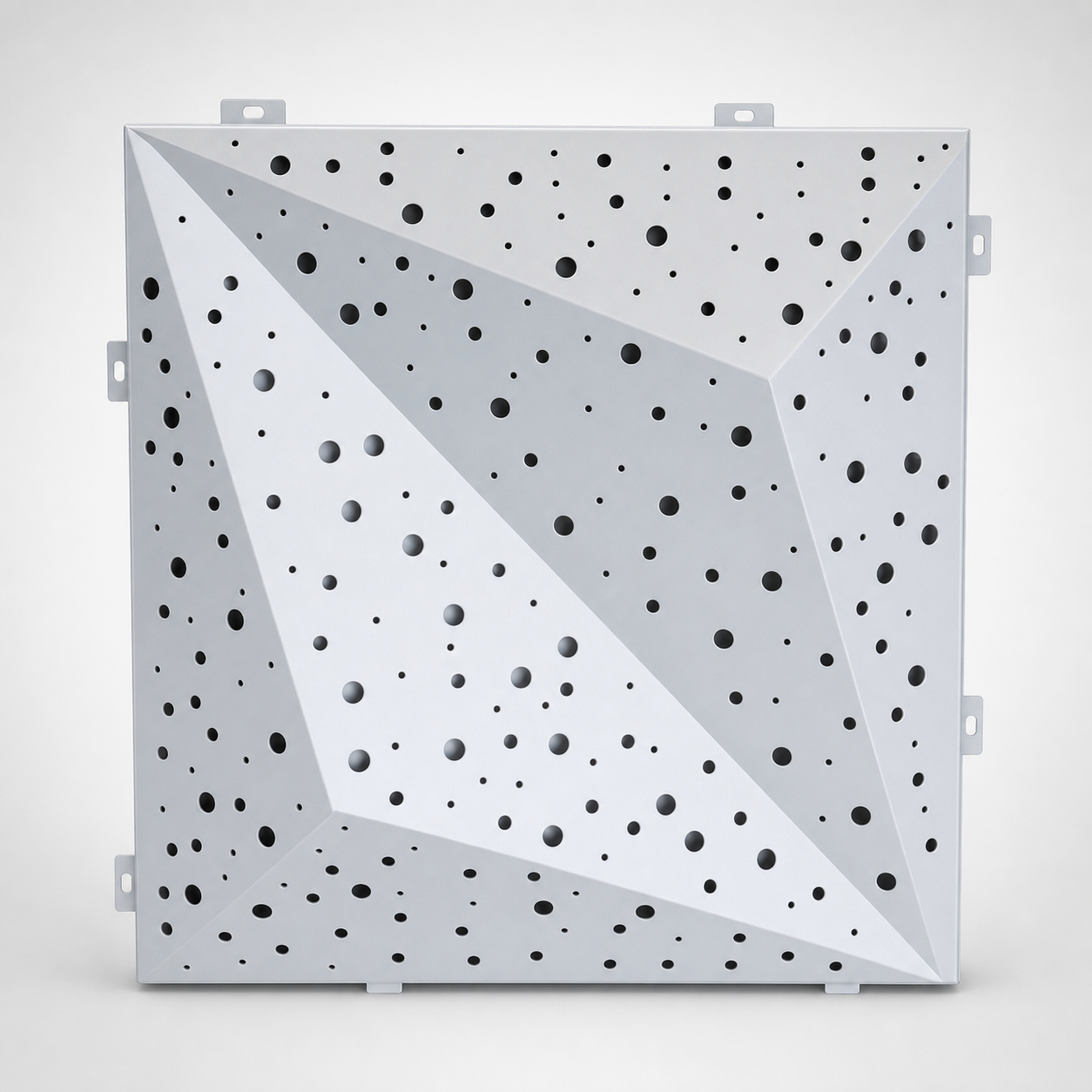
What Makes a 3D Diamond Perforated Panel Different?
A flat perforated sheet gets its visual effect mainly from the hole pattern. A 3D diamond panel also uses formed facets. Light changes across the folded faces, so the surface reads differently at close range and from across a street. The perforations can be arranged with a fixed pattern, mixed hole sizes or an image-based layout, provided the remaining material and formed geometry are practical for fabrication.
The panel is made from solid aluminum rather than aluminum composite panel. That gives the fabricator more control over folded returns, welded or reinforced backs, fixing tabs and the shape of the relief. It is useful where the drawing calls for a deeper surface than standard flat cladding can provide.
Start With the Specification, Not the Render
Renderings are useful for design review, but they do not describe how a panel will be made or installed. Before a quotation, confirm the following points in the drawing package:
| Item | What to confirm |
|---|---|
| Aluminum alloy | 3003 solid aluminum sheet is a common choice for formed architectural panels. |
| Thickness | 2.0 mm, 2.5 mm or 3.0 mm should be selected from panel size, formed depth, opening ratio, support spacing and project loading. |
| Perforation layout | Hole diameter, spacing, open area, border zone and whether the pattern changes across the diamond faces. |
| 3D geometry | Facet direction, relief depth, corner treatment, panel joints and any transition between repeated units. |
| Fixing detail | Folded returns, fixing tabs, reinforcement, bracket position, drainage and tolerance for installation. |
| Finish | PVDF coating for exterior exposure, or a powder-coated / anodized finish where appropriate to the project specification. |
How Thickness Changes the Fabrication Decision
There is no universal thickness for a 3D perforated panel. A small interior ceiling module may use a different sheet thickness from a large facade screen. More perforation removes material; a deeper formed facet changes stiffness; larger panels place more demand on the edge returns and support system. The panel drawing should therefore be reviewed as a whole rather than choosing thickness from a generic product list.
- 2.0 mm: often considered for smaller modules or protected interior applications when the geometry and support detail allow it.
- 2.5 mm: a common middle option for many decorative facade and feature-panel applications.
- 3.0 mm: often specified where panel sizes, formed depth, exterior exposure or support spacing call for greater rigidity.
The final selection belongs in the approved shop drawing and project engineering review. Punchuk can review a drawing or reference panel before production so that the visible pattern and the hidden fixing detail work together.
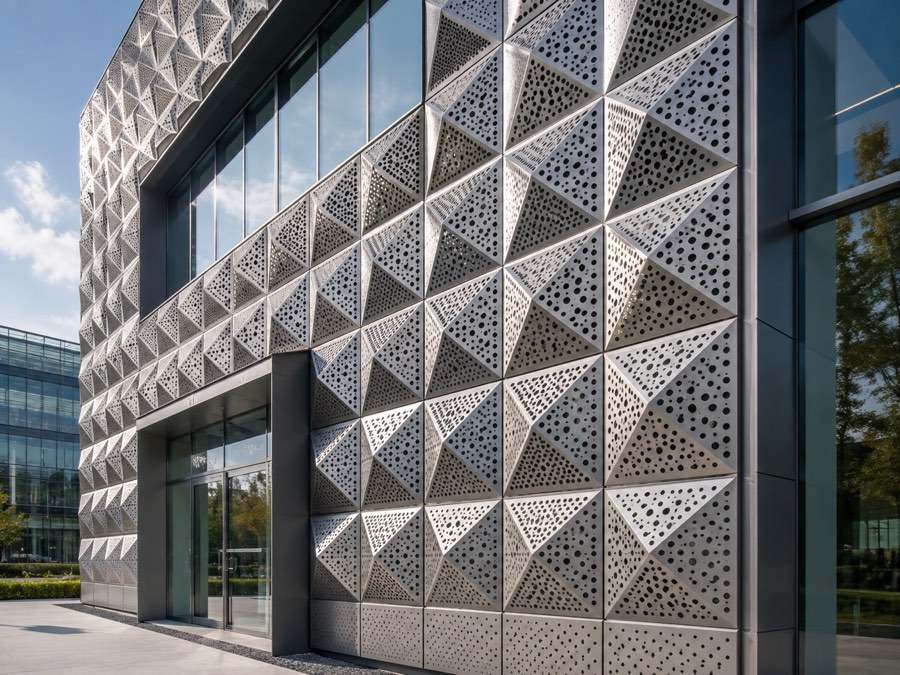
Perforation and Forming Sequence
For this type of panel, the pattern cannot be separated from the shape. The CNC perforation field needs a controlled edge zone around folds, tabs and panel joints. The forming operation then has to keep the diamond faces aligned without distorting the intended open area. A sample panel is useful when the project relies on precise visual rhythm, mixed hole sizes or a reflective finish.
Typical factory coordination includes drawing review, panel layout, CNC punching, forming, folding, reinforcement and fixing-tab preparation, surface finishing, quality checks and export packing. The exact order depends on the drawing and the panel geometry.
Where These Panels Work Well
- Commercial facade cladding and curtain wall feature zones
- Hotel entrances, retail fronts and reception canopies
- Architectural screens that need shade, airflow or filtered visibility
- Interior ceilings, corridors and public-space feature walls
- Column covers and freestanding decorative screens
For a non-perforated interior system made from repeatable flat planes, use the 3D faceted aluminum ceiling design guide. It covers module geometry, lighting and service coordination, general 2.0, 2.5 and 3.0 mm starting points, and RFQ inputs without competing with this perforated facade guide.
For a flat pattern without the formed surface, compare the broader perforated aluminum panel range. For project drawings that require solid folded construction, see solid aluminum panels.
How to Compare Supplier Quotations
Two quotations can look similar while covering very different fabrication scopes. Ask whether the quoted price includes the formed diamond surface, changing hole sizes, folded returns, reinforcement, fixing tabs, coating standard, panel labeling, protective film, export packing and production photos. If the panel is part of a facade system, also clarify which brackets or support components are included and which remain with the installer.
Questions Buyers Usually Ask
Can the diamond pattern be customized?
Yes. The facet layout, perforation density, hole diameters, panel proportions, finish and color can be coordinated from drawings or a design reference. A fabrication drawing is needed before production.
Can the panel use a PVDF finish?
Yes. PVDF coating is commonly considered for exterior facade applications. The required coating system, color reference and performance standard should be confirmed before the order is released.
Can the factory provide a sample?
For complex geometric or visual requirements, a sample helps confirm the form, perforation appearance, coating and fixing approach before volume production.
What should be sent for quotation?
Send drawings, a sketch or reference image, panel dimensions, quantity, expected thickness, finish, project location and installation information. That is enough to start a practical drawing review.
Send a 3D Perforated Panel Drawing for Review
Send the panel drawing or design reference, approximate quantity, thickness target, finish and project country. Punchuk can review the fabrication approach before preparing a quotation.
Related resources: 3D Diamond Perforated Solid Aluminum Panel product page, curved solid aluminum panel guide, Punchuk factory capability, and completed aluminum panel projects.
 English
  Vietnamese
  Malay
Malay  Indonesian
  Arabic
  Thai
Thai  Chinese
  Russian
  Kazakh
  Spanish