
Краткий ответ: Perforated aluminum facade panels are project-specific screens or cladding modules defined by the hole pattern, open-area ratio, panel size, thickness, folded returns, reinforcement, finish and fixing method. Buyers should send elevations, panel drawings, pattern files, quantities and project conditions before fabrication is priced or released.
Image note: each image on this page is shown only as an architectural application reference. It is not presented as a named project supplied, manufactured or installed by Punchuk.
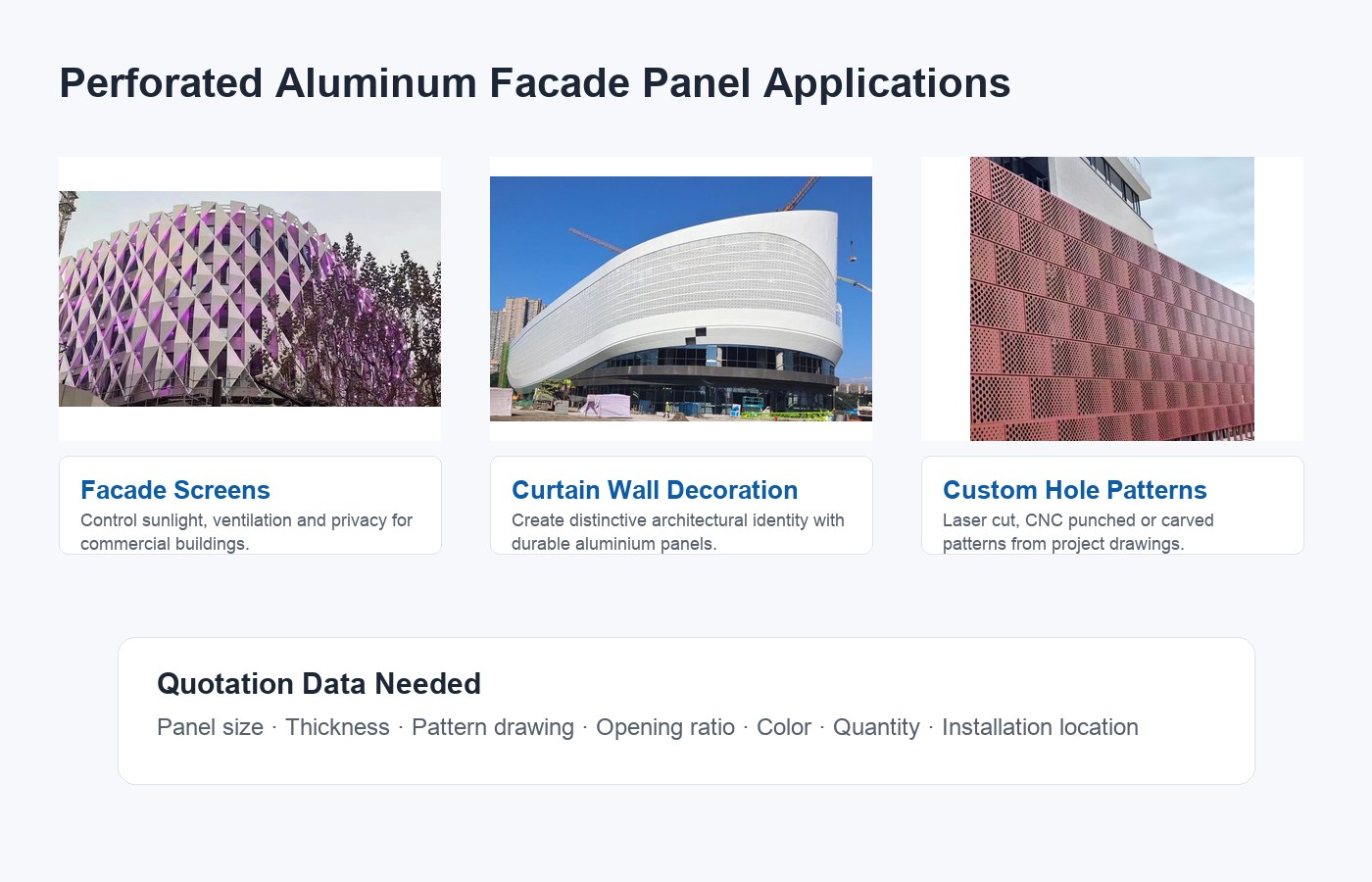
Perforated aluminum facade panels are used when a building needs ventilation, shading, privacy and decorative identity at the same time. They can work as curtain wall screens, sunshade panels, balcony screens, parking facade panels, feature walls, exterior cladding elements and interior metal partitions.
For buyers, the most important point is that a perforated panel is not only a decorative sheet with holes. Hole size, open area, panel thickness, folded edge, reinforcement, coating, wind load and installation support all affect the final strength, appearance and price. This guide explains the key specification details before requesting a quotation.
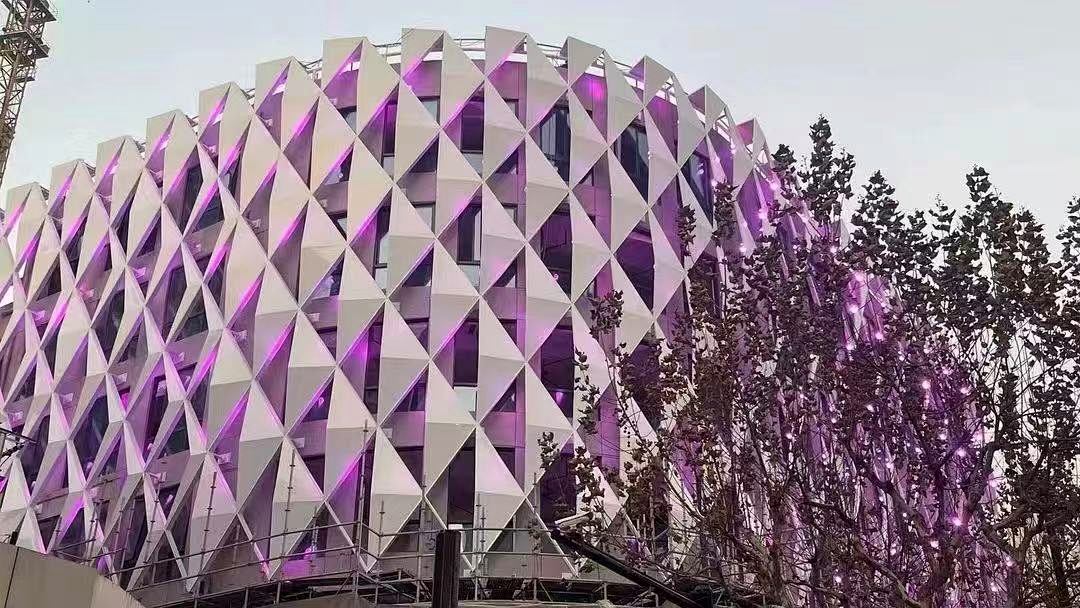
What Is a Perforated Aluminum Facade Panel?
A perforated aluminum facade panel is an aluminum cladding panel with holes, slots or custom patterns processed into the sheet before forming and finishing. The panel can be flat, folded, curved, framed or custom shaped according to project drawings. In architectural projects, it may also be called perforated aluminum screen, punched aluminum panel, laser cut aluminum panel or decorative metal facade screen.
Punchuk can fabricate perforated aluminum panels from solid aluminum sheet with CNC punching, laser cutting, bending, welding, polishing, surface treatment and coating. Common project materials include 1100, 3003 or 5052 aluminum alloy, with thickness selected according to panel size, open area, wind load and installation method.
Common Applications
- Exterior facade screens for commercial buildings, hotels, offices and public buildings.
- Curtain wall decoration where the design needs depth, shadow and a lighter visual effect.
- Sunshade panels and ventilation panels for warm climates and exposed elevations.
- Balcony screens, privacy screens and parking garage facade panels.
- Interior feature walls, ceiling panels, partitions and decorative metal surfaces.
- Retail fronts, cultural buildings, transport spaces and renovation projects.
Hole Pattern, Open Area and Visual Effect
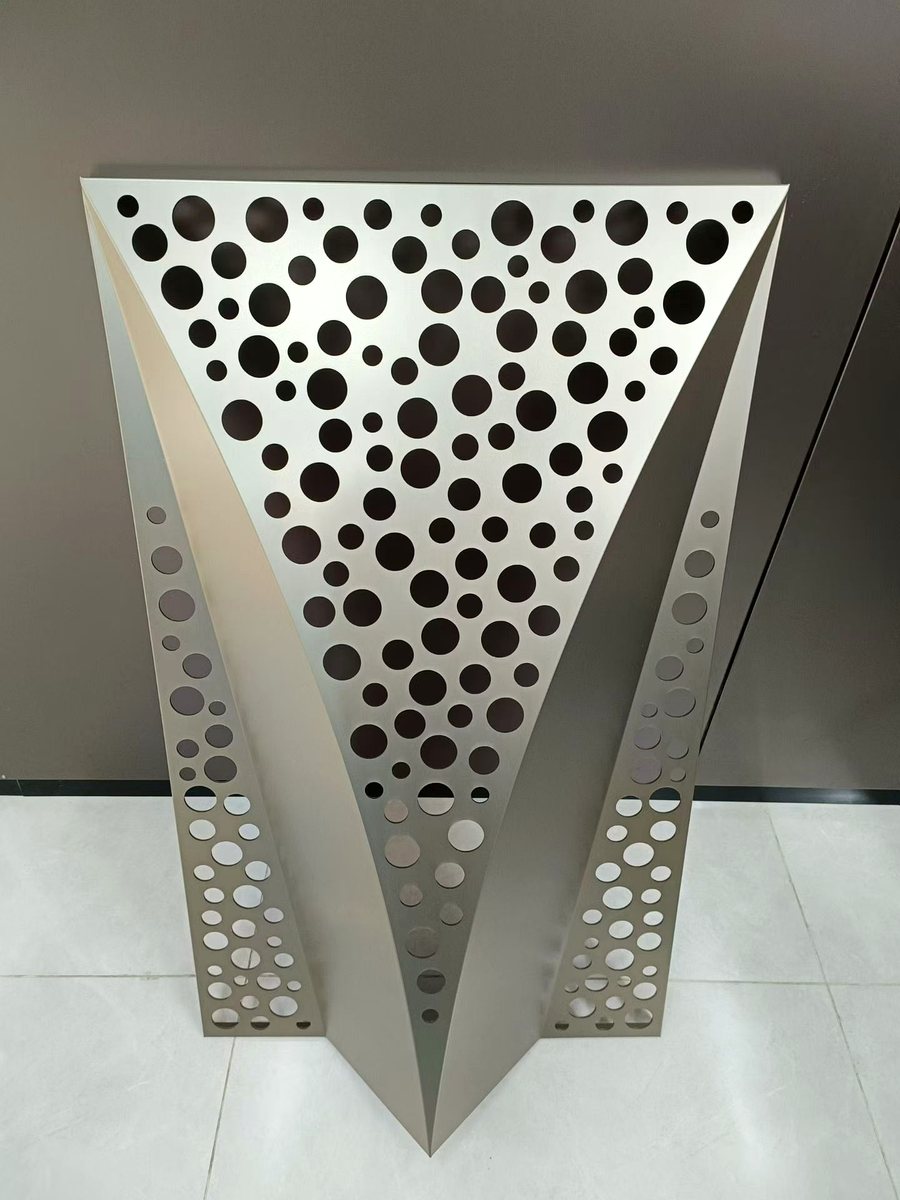
The perforation pattern controls both the look and performance of the panel. Common choices include round holes, square holes, slots, staggered holes, triangular holes, irregular geometry, custom artwork and logo-inspired patterns. A higher open area can improve airflow and transparency, but it may reduce panel stiffness if the thickness, edge distance and reinforcement are not designed correctly.
When selecting a pattern, check hole diameter, hole spacing, edge distance, open-area ratio, panel direction, joint position and how the pattern continues across multiple panels. For projects where the facade is viewed from a distance, sample approval is important because small pattern changes can affect the overall building appearance.
Thickness, Strength and Reinforcement
Perforated aluminum panels usually need more strength review than plain solid panels because the holes remove part of the metal sheet. Panel thickness should be selected together with panel size, open area, folded edge depth, alloy, wind load, fixing method and support frame. For many exterior facade projects, 2.0mm, 2.5mm or 3.0mm solid aluminum sheet may be considered as a general starting point. Final selection depends on panel dimensions, open-area ratio, design load, support spacing, folded returns, stiffeners, fixing method, local codes and project engineering review.
Large panels, high open-area panels or panels used in windy locations may need reinforced ribs, back frames or smaller panel modules. Edge distance is also important because holes placed too close to a fold, fixing point or panel edge can weaken the panel and create distortion during fabrication.
Related reading: Руководство по толщине алюминиевых облицовочных панелей.
Finish Options for Exterior Perforated Panels
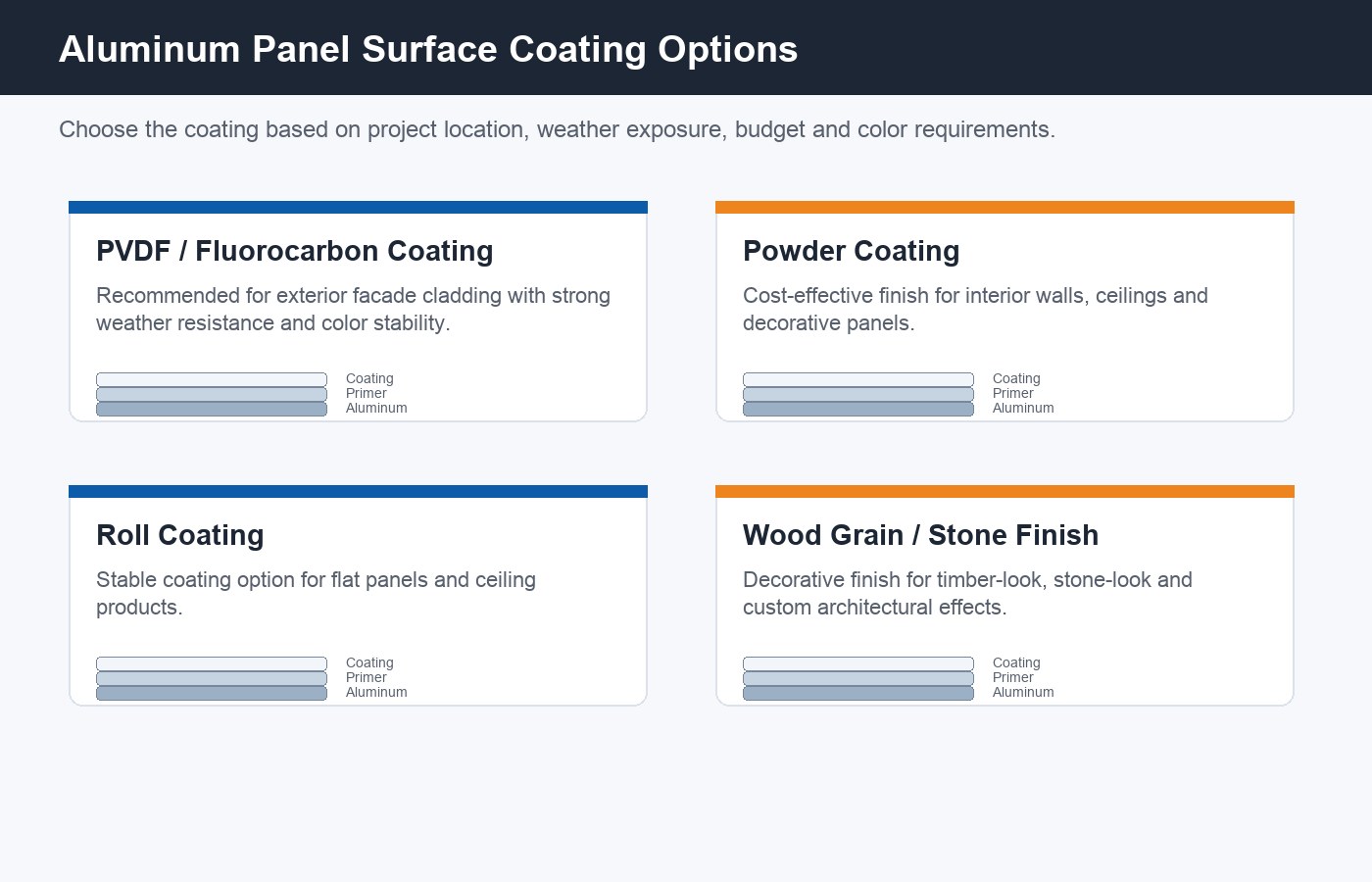
Exterior perforated aluminum facade panels commonly use PVDF coating or fluorocarbon coating for weather resistance, UV resistance and color stability. Powder coating can be suitable for many interior and sheltered applications. Other finish options may include anodized effect, wood grain, metallic color, stone effect or custom color matching.
For exterior projects, confirm color code, gloss level, coating system, coating thickness, sample approval and expected warranty. Because perforated panels have many exposed cut edges, pre-treatment and coating coverage should be controlled carefully during production.
Specification Checklist
| Item | What to Confirm |
|---|---|
| Область применения | Facade screen, curtain wall decoration, balcony screen, sunshade, parking facade or interior feature wall. |
| Pattern | Hole shape, hole size, spacing, open-area ratio, artwork file and pattern direction. |
| Размер панели | Length, width, folded edge, joint size, module layout and installation direction. |
| Материал | Aluminum alloy, thickness, temper and whether reinforced ribs or frames are required. |
| Finish | PVDF coating, powder coating, anodized effect, wood grain, color code and gloss level. |
| Engineering | Wind load, fixing method, support frame, edge distance and sample approval. |
| Quotation | Drawings, quantity, project location, delivery schedule and packing requirement. |
Factory Process and Quality Control
A typical custom perforated aluminum panel process includes drawing review, material cutting, punching or laser cutting, bending, welding or frame assembly, grinding, pre-treatment, coating, inspection, labeling and packing. For projects with complex patterns, a sample panel or mock-up can help confirm appearance, strength and installation details before mass production.
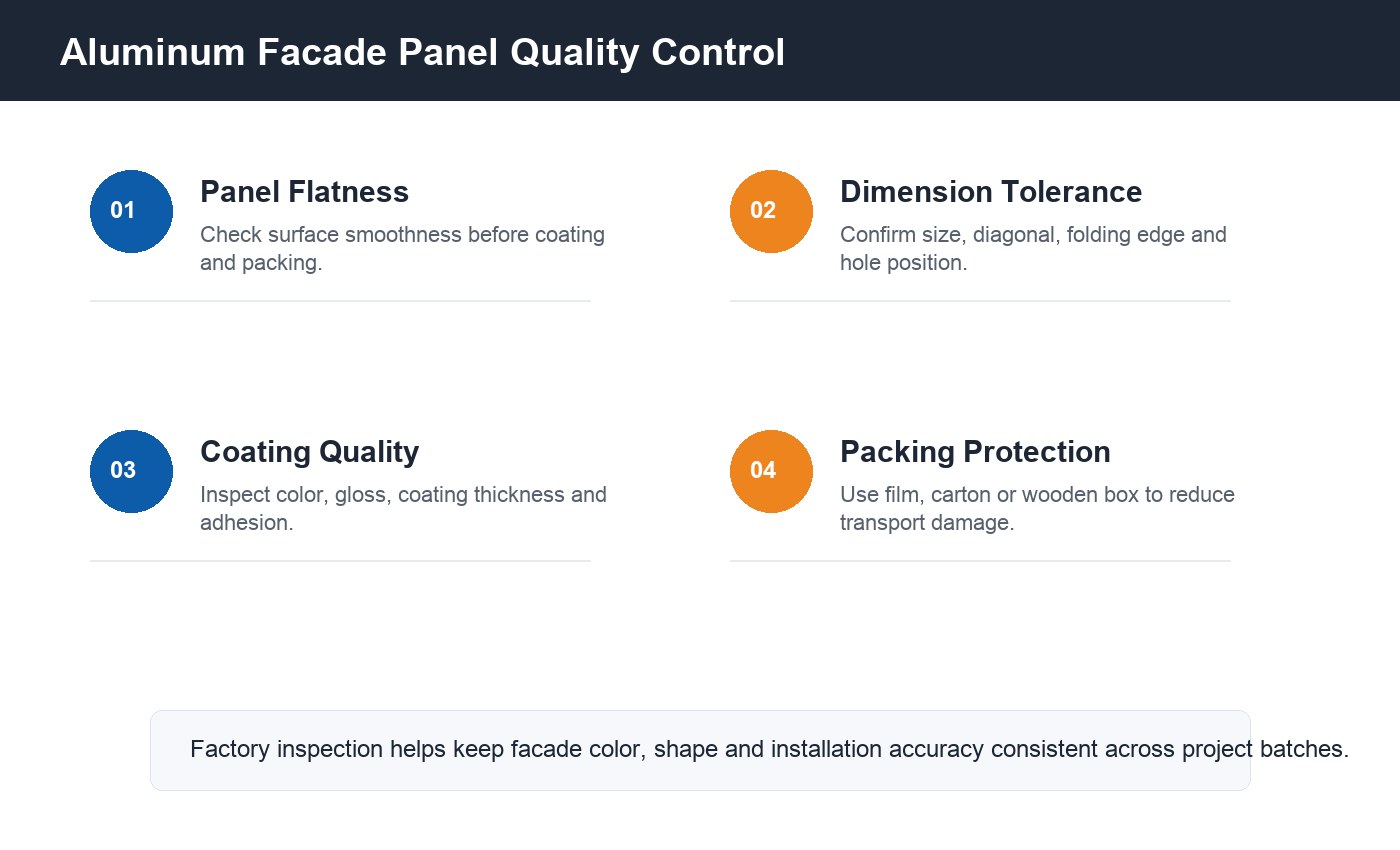
Quality checks should include pattern accuracy, hole burrs, panel size, diagonal tolerance, folded edge quality, surface flatness, coating color, coating coverage, packing protection and panel labeling. Export projects should also confirm carton, wooden case or pallet packing according to shipping method and site handling conditions.
RFQ Checklist for Perforated Aluminum Panels
- Facade drawings, elevation layout or panel schedule.
- Panel size, folded edge depth, thickness and quantity.
- Hole pattern, open area, artwork file or reference image.
- Material requirement, alloy preference and reinforcement details.
- Finish type, color code, gloss level and coating standard.
- Project location, wind load requirement and installation method.
- Packing requirement, destination port and delivery schedule.
Related Product and Guide Links
For product details, see Алюминиевая перфорированная панель, Панель с лазерной резкой, Панели из цельного алюминия и Алюминиевая облицовочная панель. For related reading, review Изогнутые и перфорированные алюминиевые фасадные панели, Алюминиевые панели с PVDF-покрытием для наружных фасадов и Как запросить расценки на алюминиевые облицовочные панели, изготовленные по индивидуальному заказу.
Часто задаваемые вопросы
Can perforated aluminum panels be used outdoors?
Yes. Perforated aluminum panels are widely used outdoors for facade screens, curtain wall decoration, sunshade panels and balcony screens. Exterior projects should confirm coating system, panel strength, wind load and fixing method.
Does a higher open area make the panel weaker?
Generally yes. A higher open area removes more metal from the sheet, so thickness, edge distance, reinforcement and module size should be reviewed carefully before production.
Which finish is best for exterior perforated facade panels?
PVDF coating or fluorocarbon coating is commonly used for exterior facade panels because it offers good weather resistance and color stability. Powder coating can be suitable for interior or sheltered applications.
Can Punchuk make custom perforation patterns?
Yes. Punchuk can fabricate custom hole patterns, laser cut designs and decorative screen panels according to drawings, artwork files or approved samples.
What information is needed for a perforated panel quotation?
Send elevations or panel drawings, dimensions, quantity, hole pattern, open area, thickness, alloy, folded edges, reinforcement, finish, fixing information, destination and delivery schedule.
Related Hotel Facade Project
For a real project reference, see the Malaysia Hotel Solid Aluminum Panel Project by Punchuk. The case shows custom solid aluminum panels, perforated aluminum facade screens, geometric aluminum cladding, export packing, container loading, site installation progress and interior aluminum ceiling panels for a hotel project.
This project is useful for buyers comparing solid aluminum panel manufacturers, PVDF aluminum facade panels, perforated curtain wall screens and custom aluminum cladding suppliers for hotel or commercial building projects.
Planning a Perforated Aluminum Cladding Project?
Send your drawings or BOQ with the panel thickness, perforation pattern or open area, finish, quantity, project location and required delivery date. We will review the scope and tell you what information is still needed before quotation.
 Russian
  English
  Vietnamese
  Malay
Malay  Indonesian
  Arabic
  Thai
Thai  Chinese
  Kazakh
  Spanish