
3D Aluminum Panels for Walls, Ceilings and Facades

Route the geometry before fabrication

3D aluminum panel routes for walls, ceilings and facades

Compare folded and faceted modules, pressed relief, raised round-tab texture and other formed solid aluminum routes by application. Punchuk can review geometry, panel segmentation, joints, returns, reinforcement, finish, fixing interfaces and export packing before quotation.

Wall modulesCeiling geometryFacade segmentationDimensional QC

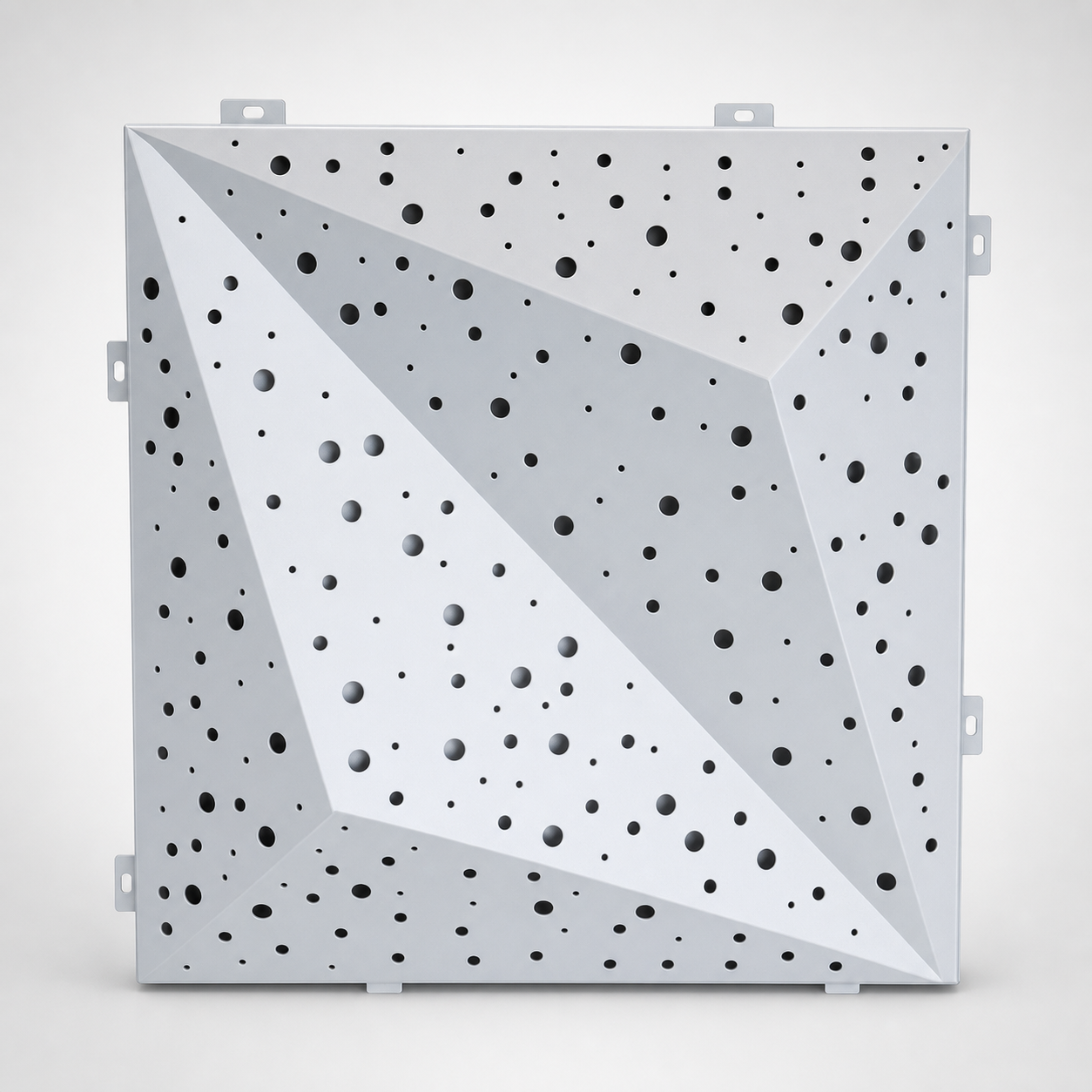
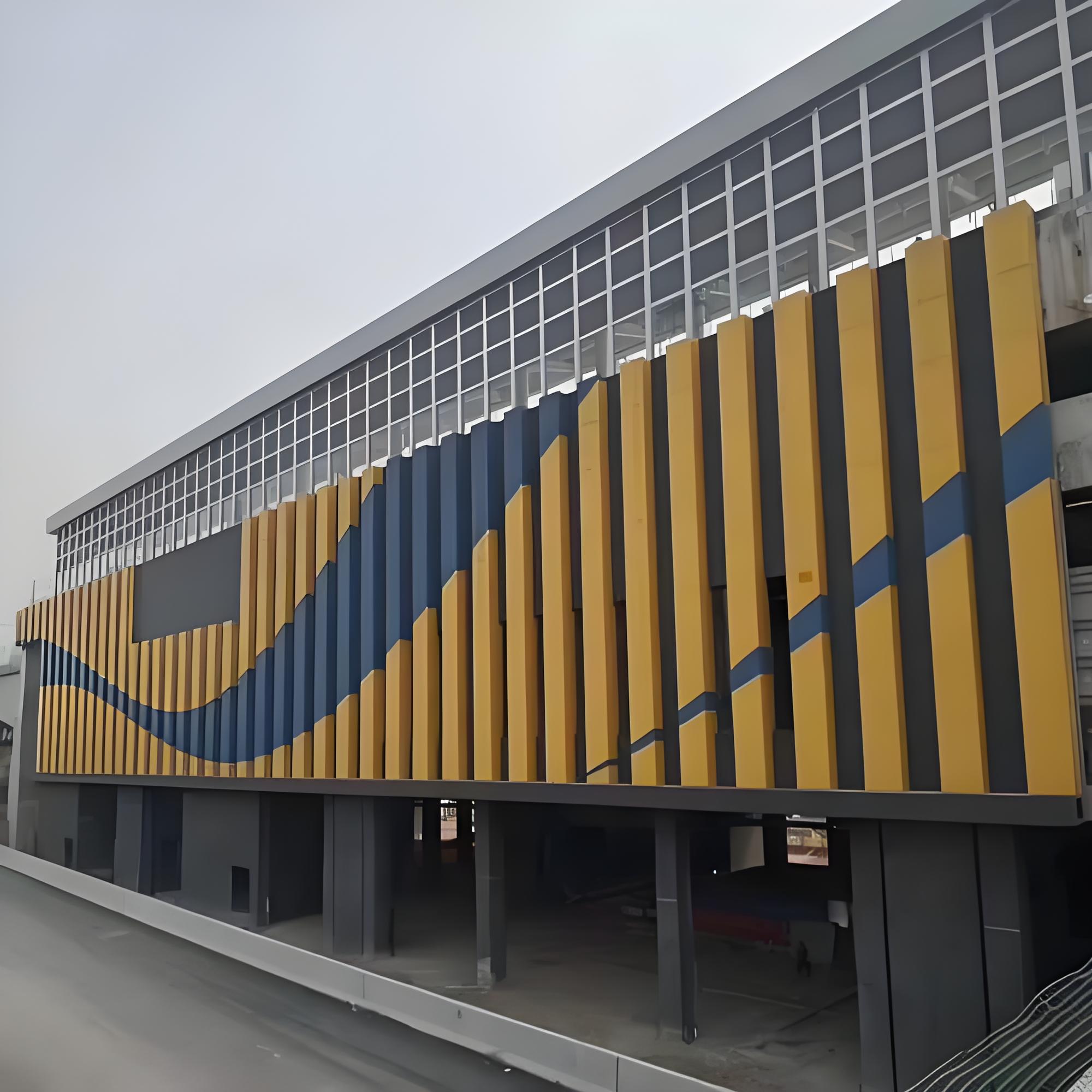
Quick answer: 3D aluminum panels are project-specific solid metal modules formed by folding, faceting, embossing, pressing or raised-tab punching to create depth across walls, ceilings and facades. Select the route by geometry first, then confirm panel segmentation, joint lines, formed depth, returns, reinforcement, finish, f...
3D Aluminum Panel Routes and Quotation Notes

Quick answer: 3D aluminum panels are project-specific solid metal modules formed by folding, faceting, embossing, pressing or raised-tab punching to create depth across walls, ceilings and facades. Select the route by geometry first, then confirm panel segmentation, joint lines, formed depth, returns, reinforcement, finish, fixing interfaces and packing from coordinated drawings or a 3D model.

Choose the 3D panel route by application and geometry

For raised facade texture made by partially punched tabs, use the round-tab 3D aluminum facade guide. For non-perforated ceiling modules built from distinct flat planes, use the 3D faceted aluminum ceiling guide. For flat, folded, curved or shaped opaque cladding without a dedicated relief process, start with solid aluminum panels.

Separate formed geometry from perforation

If the main requirement is hole shape, pitch, open area, edge distance or pattern continuity, use the perforated aluminum panel category and the perforation and open-area guide. When a design combines forming and perforation, define both requirements separately in the drawings.

Drawing coordination and factory support

Production planning can include geometry review, panel splitting, CNC cutting, bending or pressing, welding, grinding, reinforcement, sample approval, PVDF or powder coating, dimensional inspection, numbered packing and export preparation. Final feasibility depends on panel size, forming depth, alloy, thickness, tolerances and fixing details. Review Punchuk factory capability, then send drawings or a 3D model for quotation review.

en_USEnglish
Scroll to Top